Watch


The rests
Four places a rest falls, each with its length and its reason
Ask a new student what a formula is made of and he will say points. Ask a therapist of ten years and he will say points and gaps. The gaps are where half the beginners' failures live, because a gap looks like nothing happening and is therefore the first thing a hurried person removes. (Figure 26.6)
A rest in this therapy falls in one of four places, and each has a different length, a different reason, and a different consequence if it is dropped.
The four places a rest falls
1. Between one application and the next, inside a single point.
Some points are written with a stated interval between stations — most often one minute. This is not the ordinary release between six-second presses; it is a written, timed pause.
2. Between rounds of anything carrying a × N treatments sign. The round is performed, the rest is taken, the round is performed again. The rest is part of the formula and is not optional.
3. Between whole treatments given more than once in a day — most often ninety seconds, sometimes one and a half minutes, sometimes ten seconds between points, sometimes five minutes between one formula and the next.
4. Between formulas, where the patient is turned. For common ailments about thirty minutes a day is enough — and not continuously: according to the formula there may be gaps of a few minutes. These are the minutes in which the patient may speak.
Now the written instances, each with the reason attached to it, because the reason is what stops you dropping the rest at four o'clock on a busy Friday.
One rest is not written as a word at all. It is carried by a numeral — and a therapist who reads the numeral as nothing more than a serial number will give a staged treatment as one unbroken run.
What the Roman numerals of a staged treatment carry with them
Where a treatment is set out in Roman-numbered stages — I, II, III, IV and so on — the numerals indicate that each subsequent treatment is to be given after a rest period of ninety seconds.
And the reason is given with it, which makes this the plainest sentence in the therapy about what a rest is actually for: this gives the respective glands sufficient time to carry out the earlier instructions before a fresh set of instructions is given.
So a treatment written
I (15) Medulla · II (½) Ku – 20 secs × 2 trts. · III (½) Ku – 6 secs × 2 trts. · IV [ (10) Medulla (8) Pan (1) Gas Only – 6 points ] × 2 trts.
is four treatments and not four lines: ninety seconds stand between the first and the second, ninety between the second and the third, and ninety between the third and the fourth. Your hands are off the patient for four and a half minutes of it, and those four and a half minutes are the glands doing what the numerals asked them to do.
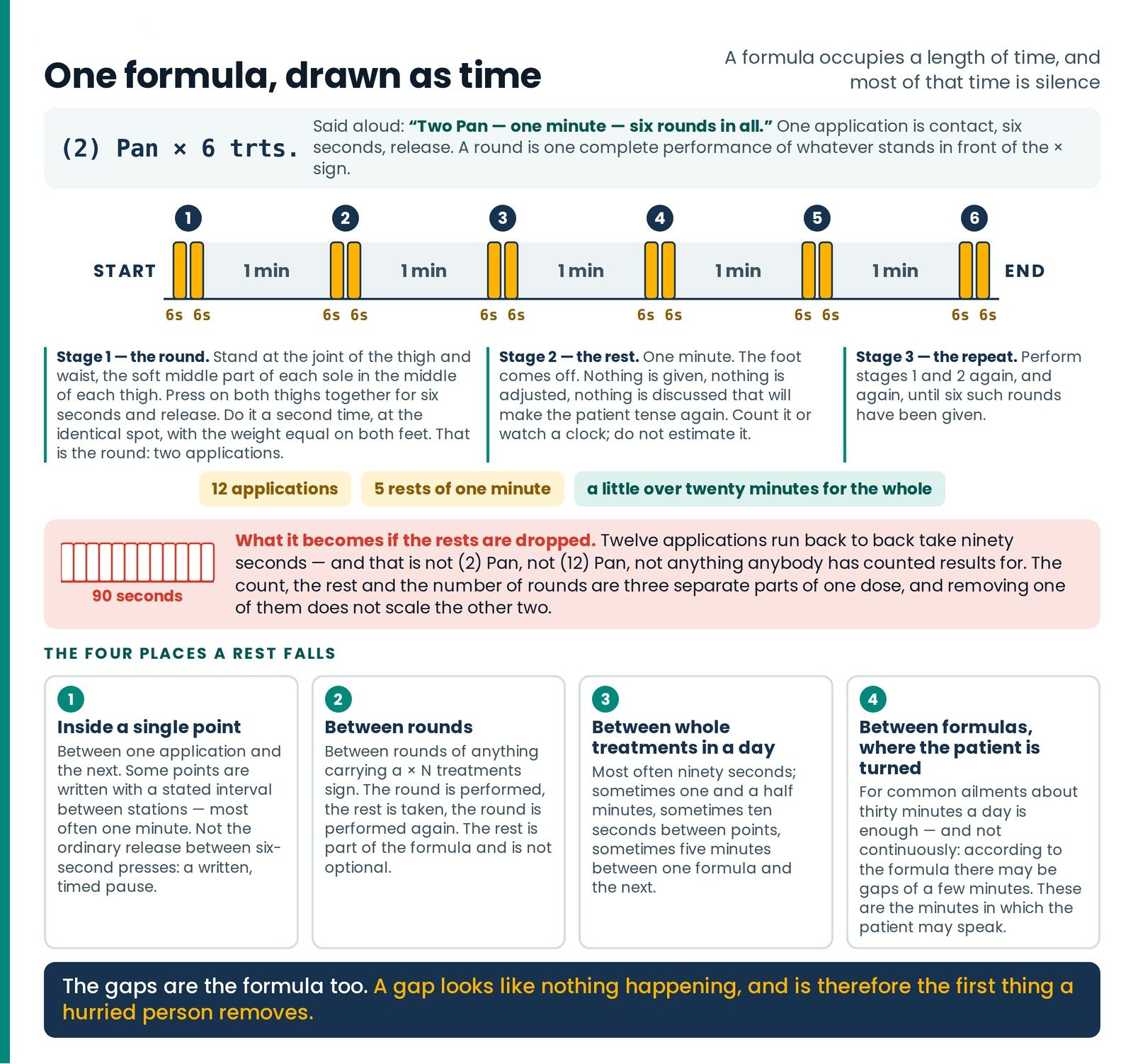
Table 8 — Every written rest in this therapy, and the reason given for it
| Where the rest falls | How long | Written like this | The reason given |
|---|---|---|---|
| Between rounds of a point | One minute | (2) Pan × 6 trts. | Two applications of six seconds, then one minute's rest, then the next round — six rounds in all |
| Between stations of a point | One minute | (1) point Gal × 6 trts. | Six seconds at station 1 → one minute → station 2 → one minute → station 3 → one minute → the whole process once more. Six times in all |
| Between stations, both sides | One minute | (1) point Liv × 6 trts. | Performed like (1) Liv – 3 points, twice — but six seconds at each place, then stop for one minute, then the next place. Two rounds, six places in all. Done four to six times in a day |
| Between whole treatments, same day | Ninety seconds | ATF, given once or twice a day | The Acid treatment formula is given with a gap of ninety seconds in between |
| Between repeats of one point | Ninety seconds | (6) Adr × 3 | The treatment is (6) Adr repeated three times, with a gap of ninety seconds in between |
| Between repeats of a formula | Ninety seconds | the Mild alkali formula × 3 treatments | Once or twice a day, with a gap of ninety seconds in between each treatment |
| Between repeats of a Medulla line | One and a half minutes | (5) Medulla × 3 trts. | All the Medulla treatments of the cranial-nerve tables are to be given three times at an interval of one and a half minutes |
| Between each point of a formula | Ten seconds | the CCK Normal formula | Give a gap of ten seconds between each point. By this, digestion and absorption improve |
| Between two formulas | Five minutes | the Inflammation formula, then (3) ONS (20) TF (6) NNS | After a gap of five minutes, the abdomen-setting sequence is given |
| Between one joint and the next | One minute | All-joints ghisai, after New Star Modified | Because an ordinary person takes one minute to take sixteen breaths, and sixteen breaths are needed for more than about ninety per cent of the carbon dioxide to come out. Without the interval the CO₂ will not come out fully and the full benefit of the ghisai will not be had |
| Inside a repeated manoeuvre | One minute, then two minutes | Mukha Dhauti | Ten times, then rest one minute, then ten times again — continuing until the pain of the left ring finger comes out; then two minutes' rest, and re-check the finger |
| Between two numbered parts of a long treatment | One minute | I to X, then XII | Give parts one to ten, and one minute after that, in place of part eleven, give part twelve |
| Between the Roman-numbered stages of a staged treatment | Ninety seconds | I (15) Medulla · II (½) Ku – 20 secs × 2 trts. · III (½) Ku – 6 secs × 2 trts. · IV [ (10) Medulla (8) Pan (1) Gas Only – 6 points ] × 2 trts. | The Roman numerals I, II, III, IV and so on indicate that each subsequent treatment is to be given after a rest period of ninety seconds — which gives the respective glands sufficient time to carry out the earlier instructions before a fresh set of instructions is given |
| Between formulas, when the patient is turned | A few minutes | any session | For common ailments about thirty minutes a day is enough — and not continuously: according to the formula there may be gaps of a few minutes |
Read that table twice and one thing stands out: the therapy almost never leaves a rest unexplained. Sixteen breaths for the carbon dioxide. Ten seconds so digestion and absorption improve. Ninety seconds between the repeats of the Acid formula, and ninety seconds between the Roman-numbered stages of a staged treatment so that the glands can finish the earlier instructions before the next ones arrive. These are not round numbers chosen for tidiness; each of them was arrived at, and each of them carries a stated purpose you can repeat to a patient who asks why you have stopped.
When the timing changes, the writing changes
Fast, Ajay Normal, NAN and FAN — and the point left deliberately out
Not every formula is built of six-second holds, and the notation tells you so before your foot moves. The clearest case is the Fast treatment formula, which uses the same points as the Normal formula and is not the Normal formula performed quickly.
Table 9 — Fast Treatment Formula · Fast : Gas : Gas I : Gal : Spl : Liv : Mu : Supine
| Step | Point | Seconds and stations | Where |
|---|---|---|---|
| 1 | Gas | 1–2 seconds at each of about 18–20 closely spaced stations | Both thighs — Gas Only, the thigh form Both sides |
| 2 | Gas 'I' | 1–2 seconds, same close spacing | Both calves — the intestine variant Both sides |
| 3 | Gal | 1–2 seconds, same close spacing | Left thigh Left |
| 4 | Spl | 1–2 seconds, same close spacing | Right thigh Right — the opposite-pair partner of step 3 |
| 5 | Liv | 1–2 seconds, same close spacing | Left arm + left thigh Left |
| 6 | Mu | 1–2 seconds, same close spacing | Right arm + right thigh Right — the opposite-pair partner of step 5 |
| 7 | optional | as required | Rt. Ov., Lt. Ov. or WD — given after these if there is need according to the disease and the patient's pains |
The difference, stated exactly. While giving the Normal formula we apply pressure at three (or four) places on the thigh or the hand for six seconds. While giving the Fast formula we do not stay more than one or two seconds at any point, and we go on changing the place of the pressure, keeping the places so close together that pressure comes to be applied at about eighteen to twenty places on the hand or the foot — from which the result is even better than with the Normal formula.
That is why the line is written with colons instead of brackets. There are no six-second applications to count, so there is nothing to put in a bracket. The notation changed because the timing changed — and a therapist who reads Fast : Gas : and starts counting to six has misread the punctuation, not the point.
And immediately after, a formula defined by something that is not in it.
Table 10 — Ajay Normal formula · (8) Pan (3) Gal (7) Liv (6) Gas 'I' – 3 points Supine 6 sec
| Step | Point | Applications | Where | Note |
|---|---|---|---|---|
| 1 | Pan | (8) | Both thighs together Both sides | As in the Normal formula |
| 2 | Gal | (3) | Left thigh, hip → knee Left | As in the Normal formula |
| 3 | Liv | (7) | Left arm + left thigh Left | As in the Normal formula |
| 4 | Gas 'I' | (6), at the 3-point form | Both calves Both sides | The prose gives the equivalent as (1) Gas 'I' – 6 points; giving it provokes the jejunum and ileum, by which the absorption of digested things takes place properly |
| — | Spl | omitted | — | Deliberately absent — this is the defining feature of the formula |
In this Ajay Normal formula Spl has not been given. So from this formula patients of auto-immune disorders have received great benefit — such as MD, muscular dystrophy; MND, motor neuron disorder; myopathy, and so on. The reason is given in full: provoking Spl will increase the working of the lymphocytes. An auto-immune disorder is the name given to that condition in which the cells of the thymus gland begin to kill the body's own cells. And in auto-immune disorder the lymphocytes are hyper — that is, they work more than is needed. Therefore provoking them will increase the disease still further.
Learn the shape of that argument, because you will meet it a dozen times in . An omission is an instruction. A formula may be named, taught and remembered for the point it leaves out, and the blank space in the line carries as much weight as any bracket in it.
With the Normal formula or the Fast treatment we improve the digestive power; with the Ajay Normal formula the absorption of digested elements takes place properly. When both are given one after the other, digestion begins to become completely right, by which all the elements of the food are properly digested and their absorption too happens correctly.
Remember why that matters more than it sounds. The basic chemicals — the raw materials — of all glands and enzymes are made in the intestines only after the digestion and absorption of food. Whether it be tyrosine, the amino acid that is the basic chemical of the thyroid gland's T₃ and T₄ hormones, or 1,25 DCC for the absorption of calcium — for all of them, the digestive system must be in order.
Which brings us to the simplest and most useful piece of notation in the therapy: two formulas bound into one treatment by Roman numerals.
NAN and FAN
When both of the above are to be given together, it is called NAN or FAN —
NAN = I Normal formula, II Ajay Normal formula. FAN = I Fast treatment, II Ajay Normal formula.
If, before the Fast formula, we give (10) Medulla, and afterwards give the Fast treatment, it will be better still. (10) Medulla provokes the vagus nerve — the tenth cranial nerve — by which the digestive system will work still better.
And one further use, which every therapist should know before he needs it: if, from any of our treatments, the patient should have an adverse effect, then in order to normalise the effect of the treatment given earlier, we can give NAN or FAN.
The Roman numerals are doing real work there. They do not mean these two are related; they mean give part one, then part two, in that order, as one treatment.
The uses of these three formulas — the Normal, the Fast and the Ajay Normal — are for all problems of the stomach:
| अपचन / मन्दाग्नि — indigestion, weak digestive fire | अजीर्ण — dyspepsia |
|---|---|
| डकार — belching | भूख नहीं लगना — no appetite |
| गैस की तकलीफ — trouble from gas | पेट में अल्सर — ulcer in the stomach |
| नाभि के ऊपरी भाग में दर्द — pain in the upper part of the navel |
Besides these, they are also useful in these major diseases — muscular dystrophy, motor neuron disorders, and Guillain-Barré syndrome.
How the families are named, and why the naming is worth learning
Four ways a formula is named, and three places it came from
One hundred and thirteen formulas is a great many names to carry, and a student who tries to carry them as a flat list will drop most of them. They are not a flat list. Every formula in this therapy is named according to one of four conventions, and once you know the four you can very often say what an unfamiliar formula is for before you turn to its page.
The four ways a formula gets its name
a. Formulae which correct a specific condition of the body — the Acid treatment formula, which corrects acidosis; the Genes treatment formula, for genetic disorders; the Black treatments, to correct pigmentation, that is black colour in the body.
b. Formulae which correct the function of certain organs of the body — the Vater treatment; the Medulla treatments.
c. Formulae which produce the same effects in the body, akin to those produced by certain chemicals — Heparin; 1,25 DCC; B₁₂.
d. Formulae and treatments with proper names. Some senior students or patients have helped in the research that produced a formula or treatment; in such cases the treatment bears the proper name of the person concerned, as a mark of respect — the Maunish formula, the Raman treatment, the Anil Shama formula.
Table 11 — The four naming classes, and what a name in each class promises you
| Class | What the formulae in it do | Examples given | What you may assume on reading the name |
|---|---|---|---|
| a | Correct a specific condition of the body | Acid treatment formula (corrects acidosis); Genes treatment formula (genetic disorders); Black treatments (pigmentation — black colour in the body) | The name states the condition. Confirm the condition is present before giving it |
| b | Correct the function of certain organs | Vater treatment; Medulla treatments | The name states the target. It does not state the disease, and the same organ formula serves several complaints |
| c | Produce effects akin to those produced by certain chemicals | Heparin; 1,25 DCC; B₁₂ | The name states a resemblance. Nothing whatever is administered |
| d | Carry the proper name of a person who helped in the research | Maunish formula; Raman treatment; Anil Shama formula | The name tells you nothing about the indication. Look it up; a person's name is a receipt, not a description |
There is a second classification, and it answers a different question. The four classes above tell you what a formula is named after. This one tells you where it came from — and it appears not at the front of the formulary but at the very end of it, which is itself worth noticing. A man sorts his own life's work into kinds only after he has finished making it.
Table 12 — The three families of formulas, by where they came from
| Family | The phrase used | What belongs to it |
|---|---|---|
| 1. Built from the therapy's own logic | Formulas made from LMNT's own original logic | NAN, FAN, LSTF, Chole, ATF, ALTF, APR, VTF, all the Genes formulae, Vater, the Multivitamin formulae, the Oxygen formula, the Oxygen hormonal formula, and so on |
| 2. Built from the facts of physiology | Formulas made on the basis of practising the facts of physiology | P. Heparin, 1,25 DCC, angiotensin #2, estrogen, progesterone, the angina treatment, the treatment for hypothyroidism, HCl, and all the UDF formulas, and so on |
| 3. Gifts of nature | कुदरती देन (kudratī den) | All the Medulla treatments; Lactic acid; (6) Adr; Left and Right Swt; Thymus Chest; Formula No. 4; (2) Para; (4) Para; the Old Star and New Star treatments |
Family 1 began inside the therapy: somebody watched what one point did to a body, reasoned forward to the next point, and built a sequence. Family 2 began at the other end: a known fact of physiology was read, and a sequence was designed to act on it. Family 3 was not designed at all.
Why is any of this worth memorising? Three plain reasons.
Because the name tells you what to confirm. A class (a) name — Acid, Genes, Black — names a condition, and a condition is something you must establish before you treat it, not after.
Because the name tells you what to say. A class (c) name will be read by a patient and, sooner or later, by a doctor. You must be able to say in one sentence what it does and does not mean.
Because the name tells you where to look when a formula fails. A family 2 formula that is not working sends you back to the physiology it was built on. A family 3 formula that is not working sends you back to the clinic — to your own records, and to the therapist who first saw it.
What a chemical name is offered as evidence of
What was observed, what it means, and what was never obtained
Class (c) is the class you will be asked about — by a patient, by a relative who works in a hospital, and one day by a physician who has read the word heparin on a card and wants to know what is being claimed. So a formula-builder needs more than the rule that nothing is administered. He needs to know what stands behind the name, because the therapy set that down itself, at length, in the first person, and signed it.
The argument opens by naming what it does not have. That is the right place to begin, and it is rarer than it should be.
It is written in many places in this wiki that a particular formula produces some specific chemical in the body. Although this has been proved by experience, it has not been possible to establish it by laboratory tests, because such tests are very expensive. And there is a second difficulty: in some places the hospitals will not give the reports of the tests that were done. They say these are their own documents and cannot be handed over.
The evidence offered for a chemical name, stated whole
So what is set down is a few examples from experience, which have proved true when applied to many patients.
The claim is therefore exactly this size: the treatments are made only after deep study of the facts of physiology and after much careful thought; and on talking with the patients, from the feedback — that is, the message — received from them, it is understood that the treatments have the very same effect as those chemicals have. From which it is said that we are succeeding in producing those very things inside the body itself.
The reason the points and formulas are called by the names of the chemicals or glands whose functions they increase or provoke is precisely this — and that is why some formulas carry the names 1,25 DCC, Angiotensin #2, Heparin, Vasopressin, Oxygen and Dopamine.
Notice what kind of sentence that is. It is not we have measured it. It is this is what the patients reported, in numbers large enough to be sure of, and this is the chemical whose known work would explain it. A name in class (c) is a hypothesis written into a label — and the honest thing about the naming is that the evidence is offered formula by formula, one at a time, so that each name can be judged on its own case rather than on the strength of the others.
Here are the cases as they are given, and they are worth reading slowly, because each one shows what the therapy accepts as sufficient reason to hang a chemical's name on a sequence of pressures.
The evidence offered for each chemical name — what was observed, and what it is taken to mean
| The treatment | What was observed | The name given, and why |
|---|---|---|
| (6) Medulla — below the ear and at the side of the neck | Those whose temperature always stays at about 97 °F begin to rise a little immediately after the treatment; after two to four treatments the temperature comes to 98.4 °F and does not fall again | The chief responsibility for keeping the body's temperature correct belongs to the hypothalamus — so (6) Medulla is said to provoke the hypothalamus |
| (2) Para, given twice, at an interval of one minute | A blood pressure of 90/50 rises to 100/60 within one hour; after some days of treatment it comes to 110/70 or higher, and the giddiness the patient had before no longer comes. Proved on many such people | Named the Vasopressin treatment, on the understanding that it produces or provokes vasopressin |
| The Oxygen Formula — made around the year 2000 | The formula was built on the feeling that the quantity of oxygen in the body would increase | Named without doing any test at all. The name came first; what would have confirmed it came later, and from a hospital bedside rather than a laboratory |
| (20) Medulla | A considerable difference in the tremor of the hands of many Parkinson's patients; and where a woman's prolactin has risen, the same treatment lowers it | Parkinson's arises precisely from a deficiency of dopamine, and another of dopamine's functions is to inhibit prolactin. One treatment touching both — so (20) Medulla is said to produce dopamine |
| The Angiotensin #2 formula — the liver, the kidneys and the lungs provoked in order | A patient's low blood pressure rose and began to come right; used on various occasions, the feeling grew that the treatment really does the work that angiotensin #2 does | It is known from physiology that angiotensin #2 is formed by the working of the liver, the kidneys and the lungs — so those three were provoked in that order, in the therapy's own way. Hence the name. Given with (20) Medulla in double pneumonia |
| (2) Adr — three treatments, each at an interval of one minute, three times in the day | Sodium below 135 — say 125 — comes up to about 130 or higher after four days; continued some days more it becomes normal and rises above 135 | Aldosterone is made by the adrenal cortex and has the effect on the kidneys of not letting sodium go out in the urine. So the question is asked plainly: can we not say we have provoked the adrenal cortex to make aldosterone? |
| 1,25 DCC — the liver, parathormone and the kidneys provoked in order | The patient's cramps stopped from the very next day and did not come again; women who bleed very heavily in their menses from calcium deficiency find the bleeding reduced or stopped | It was read in Guyton's physiology that for calcium to work properly in the body a hormone called 1,25 DCC is needed, and that it is made by the liver, parathormone and the kidneys. Those same organs were then provoked in order, in the therapy's own way — and the formula took the hormone's name |
Two of those rows deserve a second look, because they are where the therapy's candour is easiest to see and easiest to miss.
The first is the Oxygen Formula, named without any test at all. The admission is made in one clause and not softened afterwards. A man who wanted to look like a scientist would have removed that sentence; it costs nothing to remove and it is the one sentence a critic will quote. It stands. What it tells a student is that a name in this therapy records a belief about what a formula does, held at the time the name was given — sometimes with years of observation behind it, sometimes, as here, with none. The name is not the evidence. The evidence is set out separately, and where there is none, that is said.
The second is the dopamine row. When several hospitals in Mumbai were telephoned and asked, the same answer came from everywhere: dopamine testing is not done in their laboratories. Which means that this particular claim could not have been tested by the ordinary route even if the money had been there. The therapy does not present that as a victory. It presents it as the reason a clinical observation is the only evidence on offer — and then goes on giving the treatment, because the tremor settles.
And one piece of clinical method sits inside the calcium argument, easy to walk past and worth carrying for the rest of your practice. If someone is short of sodium or calcium, or of both, they get cramps. So the patient is asked one question — what is your blood pressure like? If they say it is high, then it is understood that the deficiency is of calcium only, and 1,25 DCC is given. If they say it is normal, then 1,25 DCC is given for the calcium and (2) Adr for the sodium — and from the very next day the cramps stop coming. One question, asked at the mat, splitting two treatments apart.
Then the closing of the argument, and the signature under it:
The statement that stands at the head of the formulary
We make our treatments only after deep study of the facts of physiology and after much careful thought. And on talking with the patients, from the feedback — that is, the message — we receive from them, we understand that our treatments have the very same effect as those chemicals have. That is why we say that we are successful in producing those very things inside the body itself. The reason we call our points or formulas by the names of the chemicals or glands whose functions they increase or provoke is precisely this.
Dr. Lajpatrai Mehra, ND, MD (MA), D.Sc — 24.11.2005
A signature and a date are not decoration on a paragraph like that. They say: this is my claim, this is the evidence I have for it, this is the evidence I do not have, and here is when I said so. Anyone who wants to argue with it knows exactly whom to argue with and about what.
And one more sentence belongs with it, because it is a rule of conduct rather than of evidence: as soon as any good result is obtained it is told at once to everybody in contact — nothing is kept back from the students. A therapy that publishes its uncertainties and circulates its findings the week they appear is behaving in the one way that lets errors be found by somebody other than the patient.
The cases that were offered as the proof of three of those names are not told here; each belongs with the formula it belongs to, and each is told in full where that formula is taught. The girl of twenty from Suryamal village whose paralysed right hand rose fully after seven treatments of P. Heparin is in The River — Heparin, "The River". The patient at Lilavati Hospital in 2004 whose cellular oxygen climbed from 82 while the Oxygen formula was being given, and the doctor's son at Salem in 2002 whose double pneumonia turned before the dopamine and angiotensin injections could arrive, are both in Water and Salt, "Water and Salt". Read them there, with the formulas in front of you.
The notation, complete
Four questions: how many, in what order, which point, what has changed
Everything a written line in this wiki can contain is set out below. Some of it you met as vocabulary in The Shorthand, "The Shorthand", and the grading marks on a diagnosis card — Pan⁺⁺⁺⁺ down to Pan ₋ — together with the after-treatment care that belongs with them are taught in full in Uncommon Problems, "Points for Uncommon Problems"; they are named here in their place and not repeated. The same holds for the underline, which carries two different instructions in two different settings: The Shorthand, "The Shorthand", teaches both in full, and the two rows below index them. What follows is the whole written system in one table, because from Setting the Stomach onward no article stops to explain a mark again.
Flip back to this page as often as you need to. Every therapist does, for about a year.
Table 13 — The complete notation of Neurotherapy
| Mark or form | Written like this | Say it aloud | What it instructs | |
|---|---|---|---|---|
| COUNTS AND DOSES | ||||
| The bracketed integer | (8) Pan | "eight Pan" | The number of applications — presses of six seconds, each released. At a chemical point this is exact and may not be varied; at a physical point it may be exceeded by one or two for comfort | |
| The half | (½) Ku | "half Ku" | A named half-form of a point, not half the count | |
| The unit form | (1) Gal · (1) Liv – 3 points | "one Gal" | One complete unit of that point — the thing the dose is built out of. A formula header may write (3) Gal and its gloss (1) Gal; the header gives the dose, the gloss the unit | |
| The "– N points" suffix | Gas Only – 6 points · (1) Gas 'I' – 6 points | "Gas Only, six points" | The number of stations — separate places in one pass — not repetitions at one place | |
| The "– N secs" suffix | (½) Ku – 20 secs | "half Ku, twenty seconds" | One press, held exactly that many seconds, then released. – 13 secs, – 6 secs and – 3 secs are different treatments of the same manoeuvre | |
| Seconds written as a range | Fast : Gas : — 1–2 s per station | "Fast: Gas…" | No six-second hold is being counted. Do not stay more than one or two seconds at any point | |
| The equivalence note | (4) Para — four equals one | "four Para" | Four contacts make one unit: elbow, shoulder, elbow, shoulder, six seconds at each | |
| Strokes instead of presses | "three times each" | as written | A route treatment, counted in strokes at each region rather than in bracketed applications | |
| ORDER, ROUNDS AND RESTS | ||||
| Left-to-right | (8) Pan (3) Gal (3) Spl … | in order | A line is read left to right and performed in the order it is read. Nothing else about a line is more important | |
| The × sign | (2) Pan × 6 trts. | "two Pan, six treatments" | Rounds. Perform what stands before the sign, rest, repeat — that many rounds in all. Everything to the left of the sign is governed by it | |
| The brace | { I (15) Lt. Medulla II (10) Lt. Medulla III (6) Lt. Swt } × 3 treatments | "all three, three times" | The whole braced group is one round, repeated the stated number of times — not each element separately | |
| Roman numerals | NAN = I Normal, II Ajay Normal | "part one, part two" | Two or more formulas given as one treatment, in that order | |
| Roman numerals on the stages of one staged treatment | I (15) Medulla · II (½) Ku – 20 secs × 2 trts. · III … · IV … | "stage one, stage two" | The stages of one treatment, each subsequent one given after a rest of ninety seconds, so the glands may carry out the earlier instructions first. | |
| Colons | Fast : Gas : Gas I : Gal : | "Fast: Gas, Gas I, Gal" | Elements in order where no six-second hold is counted | |
| The underline — beneath a run of points whose order has been turned about | (8) Pan (1) Spl (1) Gal (1) Mu – 3 points (1) Liv – 3 points, the last four ruled beneath | say "underlined" aloud | The order has been deliberately reversed. Do not give the usual order out of habit — and ask this patient about his motions every day until the treatment is changed back. | |
| The underline — beneath a single point inside a modified formula | stage IV of the staged UDF treatment, where (8) Pan alone is ruled beneath inside [ (10) Medulla (8) Pan (1) Gas Only – 6 points ] × 2 trts. | say "underlined" aloud | It flags the modification — and signals that that point may be discontinued once the pain at it goes. | |
| The Ulta prefix | Ulta Normal · Ulta Kidney Clear | "ulta Normal" | The named formula with its order turned about, for a stated purpose and a limited period | |
| The plus sign | Th + Ch · Lu + Sh · Subclavian + Mukha Dhauti | "Thymus plus Chest" | Two points given together as one step | |
| The comma inside a code | (2) S4, S5 | "two S-four, S-five" | One step naming two adjacent stations | |
| The dash inside a step | New CNNS 'Gal – Liv' | "New CNNS, Gal to Liv" | A named span of a longer sequence — from one named point to another | |
| A written gap | "gap of 90 seconds" · "ten seconds between each point" · "one minute" | read it aloud | A timed rest, which is part of the formula | |
| WHICH POINT, EXACTLY | ||||
| The small ring | Liv° · Mu° | "Liv-zero" · "Mu-zero" | A different point: single station, hand contact high at the shoulder. The right and left kidney codes | |
| The quoted letter | Gas 'I' · Thrd 'P' · Ton 'T' · Ton 'P' | "Gas eye" · "Thrd pee" | A variant marker. Gas 'I', down the calves, is not Gas, on the thighs | |
| The Only suffix | Gas Only · Ch. Only · Lt. Ch. Only | "Gas Only" | Restricts the point to part of its field — the thigh form; the chest without the thymus; the left chest alone | |
| Side prefixes | Lt. Ov. · Rt. Parkhoo · (10) Left Medulla · (6) Right Swt | "left…", "right…" | Side is part of the identity of the point, not a detail of technique. (6) Left Swt opens; (6) Right Swt closes Left Right | |
| The ghisai suffix | L5–S1 ghisai · Gal–Spl ghisai · Calf muscle ghisai | "ghisai" | A rubbing action (घिसाई), not a still press. A rub and a press at one site are two different points | |
| Generation prefixes | Old UDF · New Genes · Pure Folic · Large Folic Black · New Star Modified | as written | Which generation or scope of a formula. Older versions are still printed beside their successors; they are not errors | |
| The Multi prefix | Multi Heparin · Multivitamin formula | "multi…" | A formula addressing several members of a family at once | |
| The hash | angiotensin #2 | "angiotensin number two" | Number, in a name taken from physiology | |
| A glyph inside a line | (20) ↑\ | ↓ · (4) ↑o↑ | "twenty Round Arrow" · "four H arrow" | The point itself, drawn instead of spelled. Write the glyph and the code where the card will be read by somebody else |
| Proper names | Ajay Normal · Raman · Maunish · Giriraj · Pradeep · Vasanti · Shukla | as written | The given name of a person in whose case the manoeuvre or formula was found | |
| FINDINGS, NOT INSTRUCTIONS | ||||
| The grading marks | Pan⁺⁺⁺⁺ … Pan ₋ | "Pan four plus" · "Pan minus" | What you found, not what you will give. An empty box is not examined; a minus is examined and silent. Taught in full in Uncommon Problems and The Educated Hand | |
| Side-and-ring findings | Gal R 1 +++ HP | as written | Point, side, ring, grade, and hardness — a palpation record | |
| CHANGING A LINE | ||||
| Trt. / trts. | Acid trt. · × 6 trts. | "treatment", "treatments" | The abbreviation for treatment — and in the second form, a round | |
| A substitution | (2) Thrd in place of (4) Thrd — heart | read the whole clause aloud | One element swapped, with the condition that requires it. A swap without its condition is a rule that is right half the time | |
| An omission | Spl absent; or "not given" | say the omission aloud | A point deliberately left out. The absence is the instruction — Ajay Normal is defined by it | |
| A conditional addition | "if there is need according to the disease and the patient's pains, Rt. Ov., Lt. Ov. or WD may be given" | read the condition aloud | An element given only if the stated condition is met. Not optional decoration — a gate | |
| A compromise | "Thrd before Adr — for the turn" | read it aloud | An order changed for the patient's comfort, with what it costs written beside it |
Thirty-odd rows look like thirty-odd things to memorise. They are four questions asked over and over: how many · in what order · which point exactly · what has been changed. Everything in the table answers one of the four, and a line you cannot read is nearly always a line where you have not yet worked out which of the four a mark belongs to. (Figure 26.8)
The two sentences that govern every line in
a.
For the formulae to give the stipulated result, the most important thing to be remembered is that the timing of six seconds pressure at each pain point should be strictly followed, except when mentioned otherwise.
b. The sequence given in the formulae is to be followed exactly. A stimulation of the organs in a different sequence can sometimes produce opposite results.
Read (a)'s last three words. Except when mentioned otherwise is not a hedge — it is the clause that lets Fast, (½) Ku – 20 secs and the Feather Touch route exist. And read (b)'s last word. Not weaker. Opposite.
Three real lines, read aloud
A side, a brace and a route, taken apart element by element
Vocabulary is not reading. Here are three lines from the later articles of this wiki, taken apart element by element — not to teach their clinical use, which belongs where they belong, but so that nothing in the table above stays theoretical.
A line with a side in it
(15) Left Medulla (6) Left Swt × 3 treatments
Said aloud: "fifteen Left Medulla, six Left Swt — three treatments." Two points, both with a side prefix, given as one round; the round performed three times, with the stated rest between rounds. Seated
The side is not an afterthought here; it is the entire clinical point. Left Medulla increases acid — giving it produces the effects of acidosis in the body — and Right Medulla increases alkali, which is exactly the opposite. And alongside that: when Left Swt is given with Left Medulla, sphincters or arteries will open or dilate; when Right Medulla and Right Swt are given, sphincters or arteries will narrow or constrict. (Swt stimulates the adrenal medulla, whereas the Medulla treatment stimulates the brain.)
So (15) Left Medulla (6) Left Swt × 3 treatments is an opening instruction and (15) Right Medulla (6) Right Swt × 3 treatments is a closing one, and they are given for opposite complaints: a cardiac sphincter that will not open against a leg swollen from varicose veins. Write Medulla without its side on a card and you have written something that might do either.
A line inside a brace
A line written as a route, not as a count
Not every treatment is written in brackets at all. Some are written as a route across the body, with the count attached to each place rather than to the point — as the Feather Touch treatment is. It is given with the patient seated on a stool, or standing if they wish; powder is applied on the forehead and face, and the therapist stands first in front of the patient's face. The stroking begins at the forehead, from above downward and from behind forward, from all directions, so that no place is left out; then above the eyes towards both sides; above the nose; above the lips; above the chin; from below the ear up to the part in front of the chin; then from behind the neck towards the front — at each place, three times each, stroked with the tips of the fingers so gently that the powder is not wiped off.
Read that as notation and three things are being said at once: the order is the route, the count is per station and not per point, and the pressure is defined by a test you can see — if the powder has moved, you pressed too hard. A formula may specify its dose by any of those means, and the writing tells you which. The whole of Feather Touch, with its arm, chest, back and leg sequence and the inverted glass under the heel, is taught in Uncommon Problems, "Points for Uncommon Problems", and again in Cranial Nerve and Brain Formulas, "The Twelve Messengers".
Two instructions travel with it that belong to this article rather than to that one, because they are rules about building, not about stroking.
A long line with conditional omissions
The longest written form you will meet is a treatment set out as numbered parts, each with its own notation, and with a caution attached to particular numbers. The Complement System formula runs from I to XIV and carries inside it almost every convention in Table 13 — Roman numerals for the parts; a + joining two points into one step; bracketed counts; four (½) Ku holds written in seconds rather than applications — twenty, thirteen, six and three, each named for a different cell; a × 2 treatments governing one part only; and a named span, New CNNS 'Gal – Liv', followed by a colon chain inside step XIII. It ends at (6) Adr for inflammation.
What makes it a lesson in construction rather than only in notation is the caution printed with it:
Writing a prescription, and reading one
A card another therapist can pick up and give correctly, rests included
A formula that exists only in the therapist's head is not a formula; it is a habit. Everything in this article is designed to be written down and picked up by somebody else — the colleague who covers your Tuesday, the daughter who will give the treatment at home, the therapist in a town you have never visited who receives a folded card eleven months from now.
And the other half of the skill, which takes four seconds and prevents most of the harm in this wiki:
How to read a line before you give it
Say the whole line aloud before anything touches the patient.
Not the first element — the whole line. In doing so you will hear, in this order:
Which positions it needs, and therefore how many times the patient turns; where the rests fall, and therefore how long the session really is; whether anything is underlined, and therefore whether a question must be asked today; whether anything is substituted, and therefore whether there is a condition in this patient you have not confirmed; and whether there is any element you cannot explain.
On that last one the rule has not changed and will not: a line you cannot explain is a line you must not change. Telephone the therapist who wrote it, or leave it out and write on the card why, with the date and your name. Both are honest. Guessing is not.