- Part ofइसका हिस्सा
- Digestive systemपाचन तंत्र
Watchवीडियो देखिए


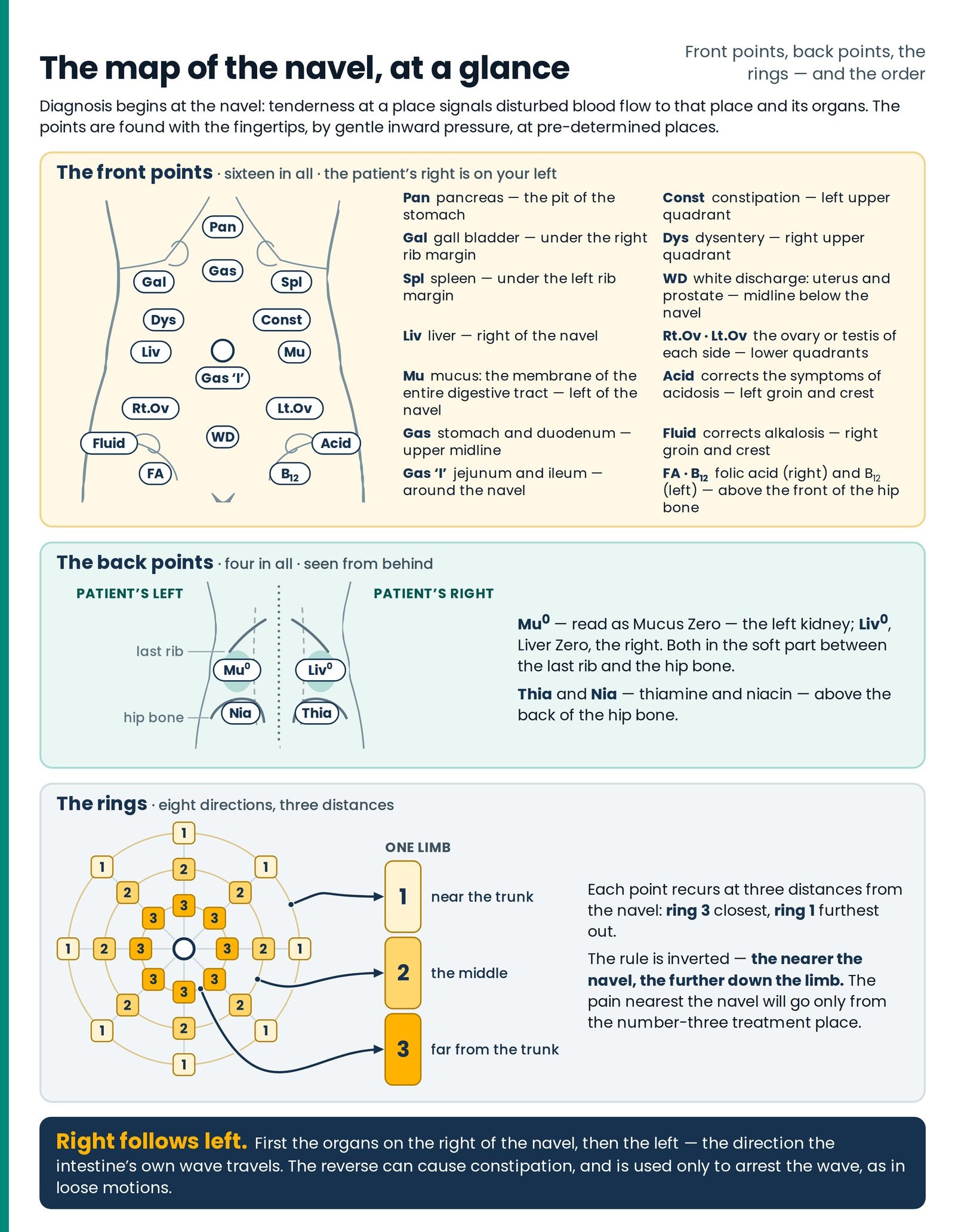
Fromस्रोत The Navel Speaks Firstनाभि के दर्द वाले पॉइंट — Pan, Gal, Spl, Liv, Mu, Gas, Const, Dys, WD
Why the navel, and why first
Pain or hardness around the navel reports disturbed blood flow
Every therapy must answer one question before it can begin: where do I look? A physician answers it with a history, a stethoscope and a laboratory. This therapy answers it with the belly, in the first two minutes — and the reason is not sentimental. It rests on an observation made over decades, confirmed on lakhs of patients, checkable by anybody on the next ten people they examine.
The observation the whole map rests on
Specific points around the navel, in front, exhibit pain or hardness — and the same points are found tender in all patients sharing a particular symptom or group of symptoms.
More broadly: any disease, whatever its individual symptoms, is generally accompanied by pain or hardness around the navel and the hip, at one or more of eighteen specific points.
And pain in an area indicates some disturbance in the blood flow to that area, and to the organ or organs associated with it.
Read the last line backwards, because that half is the working half: if the pain at a place is relieved, the blood supply to that place has been restored. Removal or reduction of one or more of those pains produces an immediate sense of well-being, which the patient herself confirms without being asked.
Two words in that teaching do quiet work. Hardness — you are feeling not only for a wince but for a place where the tissue has lost its give, where the belly wall meets your finger like a half-inflated ball instead of a cushion. A patient can be stoical about pain and cannot be stoical about hardness, because hardness is not an opinion. Group of symptoms — the point does not belong to a disease but to a pattern, which is why two people with different disease names on their cards can be tender at the same point and need the same treatment, and why one person is tender at different points on Monday and Thursday.
Why the navel in particular? Because of where the body was assembled from. Every one of us was built outward from that point; in the womb it is the door through which everything arrives, and the organs of the abdomen take their places at fixed distances from it, each at its own settled remove from all the others. Nothing in the abdomen has spare room. The organs are packed with such skill that no empty space is left over.
That packing is why the region is worth reading. For an organ to work smoothly it must go on receiving, twenty-four hours a day and without interruption, blood through the finest vessels and messages along the nerves — and those vessels and nerve bundles are exceedingly fine, running between the organs through the gaps. If through some unusual movement the internal gaps alter, pressure can fall on a capillary or a nerve bundle. The obstruction that follows need not be dramatic. First the stomach is upset; then, slowly, the balance of the whole body is disturbed.
नाभि ही क्यों, और सबसे पहले क्यों
नाभि के आसपास दर्द या सख़्ती खून के बहाव की गड़बड़ी बताती है
हर थेरेपी को शुरू होने से पहले एक सवाल का जवाब देना होता है: मैं देखूँ कहाँ? डॉक्टर यह जवाब पुरानी हिस्ट्री, स्टेथोस्कोप और लैब से निकालता है। यह थेरेपी पहले दो मिनट में पेट से निकाल लेती है — और वजह कोई भावुक बात नहीं। यह दशकों की देखी हुई बात है, लाखों रोगियों पर परखी हुई, और जो चाहे अगले दस लोगों की जाँच करके ख़ुद देख ले।
वह अवलोकन जिस पर पूरा नक्शा टिका है
नाभि के आसपास, शरीर के आगे की तरफ़, कुछ ख़ास पॉइंट्स पर दर्द या सख़्ती मिलती है — और जिन रोगियों का लक्षण या लक्षणों का समूह एक जैसा हो, उन सबमें वही पॉइंट छूने पर दर्द वाले निकलते हैं।
और मोटे तौर पर: बीमारी कोई भी हो, उसके अपने लक्षण चाहे जो हों, आमतौर पर उसके साथ नाभि और कूल्हे के आसपास अठारह ख़ास पॉइंट्स में से एक या ज़्यादा पर दर्द या सख़्ती मिलती है।
और किसी जगह का दर्द यह बताता है कि उस जगह तक, और उससे जुड़े अंग या अंगों तक, खून के बहाव में कोई गड़बड़ी है।
इस आख़िरी बात को उलटा करके पढ़िए, क्योंकि काम का हिस्सा वही आधा है: अगर किसी जगह का दर्द दूर हो गया, तो समझिए उस जगह तक खून का बहाव वापस चालू हो गया। इनमें से एक भी दर्द हटे या कम हो, तो रोगी को उसी वक़्त हल्कापन महसूस होता है — और वह बिना पूछे ख़ुद कह देती है।
इस शिक्षा के दो शब्द चुपचाप बड़ा काम कर रहे हैं। सख़्ती — आप सिर्फ़ यह नहीं देख रहे कि रोगी कहाँ सिकुड़ा, यह भी देख रहे हैं कि पेट की दीवार कहाँ अपनी लोच छोड़ चुकी है, कहाँ वह उँगली से गद्दे की तरह नहीं, आधी फूली गेंद की तरह टकराती है। दर्द पर रोगी सब्र दिखा सकता है, सख़्ती पर नहीं — सख़्ती किसी की राय नहीं होती। लक्षणों का समूह — पॉइंट किसी बीमारी का नहीं होता, एक पैटर्न का होता है। इसीलिए दो लोगों के कार्ड पर बीमारी के नाम अलग-अलग हों, फिर भी दर्द वाला पॉइंट एक ही निकल सकता है और ट्रीटमेंट भी एक ही; और इसीलिए एक ही व्यक्ति के सोमवार और गुरुवार को अलग-अलग पॉइंट दर्द वाले निकलते हैं।
नाभि ही क्यों? क्योंकि शरीर बना ही वहाँ से है। हम सब उसी एक पॉइंट से बाहर की ओर बने हैं; गर्भ में वही दरवाज़ा है जिससे सब कुछ आता है, और पेट के सारे अंग उसी से तय दूरी पर अपनी-अपनी जगह पकड़ते हैं — हर एक बाक़ी सबसे अपने तय फ़ासले पर। पेट में फ़ालतू जगह किसी के लिए नहीं है। अंग इतनी सफ़ाई से भरे हैं कि ख़ाली जगह बचती ही नहीं।
यही ठुँसी हुई बनावट इस इलाक़े को पढ़ने लायक़ बनाती है। किसी अंग को ठीक चलते रहने के लिए चौबीसों घंटे, बिना नागा, सबसे बारीक नलियों से खून और नसों (nerve) से संदेश मिलते रहने चाहिए। ये नलियाँ और नसों के गुच्छे बेहद बारीक हैं, और अंगों के बीच की झिरियों से होकर निकलते हैं। कोई अनोखी हरकत हो जाए और भीतर की ये झिरियाँ बदल जाएँ, तो किसी बारीक नली या नसों के गुच्छे पर प्रेशर आ जाता है। इसके बाद जो रुकावट बनती है, वह नाटकीय नहीं होती: पहले आमाशय (stomach) बिगड़ता है, फिर धीरे-धीरे पूरे शरीर का संतुलन।
Fromस्रोत The Navel Speaks Firstनाभि के दर्द वाले पॉइंट — Pan, Gal, Spl, Liv, Mu, Gas, Const, Dys, WD
Two bodies, read from the navel
A camp lesson and a four-complaint case, read from the pain points
दो शरीर, नाभि से पढ़े गए
एक कैंप का सबक़ और चार तकलीफ़ों वाला एक केस, दर्द के पॉइंट से पढ़ा हुआ
Fromस्रोत Each Point in Useहर पॉइंट: किस बीमारी में देना है और किसमें रोकना है
The navel, the womb and the paralysed limb
Setting the navel; and the prolapse point never written alone
Table 20 — The navel-setting points, the prolapse point and the limb points
| Point | What it is used for | When it must not be used | Notes |
|---|---|---|---|
| (3) ONS Supine | This treatment is given to correct disturbances of the navel, and to bring the navel back to its correct place if it slips | — | (3) ONS + WD is extremely good for setting the navel. |
| TF / NNS Supine | These two treatments together set all the organs of the navel. The number according to need | — | The standard closing pair after abdominal work. |
| 'P' point — the prolapse point | This is given to those women in whom sonography shows that a prolapse of the uterus has occurred — that is, her uterus has moved from its place. With this treatment we give in order to loosen her uterine muscles further | And immediately after giving this treatment, giving (6) WD is necessary; otherwise that woman will have still more trouble ▲ Take care | Some of the chief symptoms of prolapse of the uterus are: severe pain below the navel and in the back, white discharge, irregular menstruation, and infertility because of the low temperature of the body. The heel on the middle of the thigh, an upward jerk, left thigh first. |
| Shukla | Given to make the muscles of a limb — hand or foot — that has been paralysed, loose and flexible | For osteoporosis patients this treatment may perhaps increase the pain — so do not give them this treatment ▲ Take care | The wrist and the ankle, four ways each. |
नाभि, बच्चेदानी और लकवा मारा हुआ अंग
नाभि बिठाना; और वह पॉइंट, जो बच्चेदानी उतरने पर दिया जाता है और कार्ड पर कभी अकेला नहीं लिखा जाता
तालिका 20 — नाभि बिठाने वाले पॉइंट, बच्चेदानी उतरने वाला पॉइंट, और अंगों के पॉइंट
| पॉइंट | यह किसलिए है | कब नहीं दिया जाएगा | नोट |
|---|---|---|---|
| (3) ONS पीठ के बल | यह ट्रीटमेंट नाभि की गड़बड़ियाँ ठीक करने के लिए दिया जाता है, और नाभि खिसक जाए तो उसे वापस उसकी सही जगह पर लाने के लिए | — | नाभि बिठाने के लिए (3) ONS + WD बेहद बढ़िया है। |
| TF / NNS पीठ के बल | ये दोनों ट्रीटमेंट मिलकर नाभि के सारे अंगों को बिठा देते हैं। गिनती ज़रूरत के मुताबिक़ | — | पेट का काम ख़त्म करने की बँधी हुई जोड़ी। |
| 'P' point — बच्चेदानी उतरने वाला पॉइंट | यह उन महिलाओं को दिया जाता है, जिनकी सोनोग्राफ़ी में बच्चेदानी का अपनी जगह से नीचे उतर आना निकला हो (prolapse of the uterus) — यानी उनकी बच्चेदानी अपनी जगह से हट चुकी है। इस ट्रीटमेंट से हम उनकी बच्चेदानी की मांसपेशियाँ और ढीली करते हैं | और यह ट्रीटमेंट देने के तुरंत बाद (6) WD देना ज़रूरी है; वरना उस महिला को और ज़्यादा तकलीफ़ होगी ▲ सावधानी | बच्चेदानी उतर आने की कुछ ख़ास निशानियाँ ये हैं: नाभि के नीचे और पीठ में तेज़ दर्द, सफ़ेद पानी, माहवारी का बेक़ायदा होना, और शरीर का तापमान कम रहने की वजह से बाँझपन। एड़ी जाँघ के बीच पर, झटका ऊपर की तरफ़, पहले बाईं जाँघ। |
| Shukla | जिस हाथ या पैर पर लकवा मारा हो, उस अंग की मांसपेशियाँ ढीली और लचीली करने के लिए दिया जाता है | ऑस्टियोपोरोसिस के रोगियों का दर्द इस ट्रीटमेंट से शायद और बढ़ जाए — इसलिए उन्हें यह ट्रीटमेंट मत दीजिए ▲ सावधानी | कलाई और टख़ना — दोनों पर चार-चार तरह से। |
Also explained inयहाँ भी समझाया गया है
- Why the navel is the reference pointनाभि को ही केंद्र क्यों माना जाता है How a Formula Is Builtपॉइंट से फ़ॉर्मूला कैसे बनता है — क्रम के पाँच नियम
very organ at its fixed distance from the centre — and what shifts it The correspondence table is anchored on the navel, and leans on that anchor constantly.
- Setting the navel — and the toes that lead to itनाभि बिठाना — और पैर की वे उँगलियाँ जो वहाँ तक ले जाती हैं The Front of the Body IIपीठ के बल — 2: Thrd, Pit, Para, ONS, NNS, CNNS, Lymph और ओवरी पॉइंट
It is also where the whole therapy began — a boy of eleven, and the folk work of setting the navel.
- ONS — Old Nabhi Set The Front of the Body IIपीठ के बल — 2: Thrd, Pit, Para, ONS, NNS, CNNS, Lymph और ओवरी पॉइंट
Earlier its name was simply Nabhi Set — navel set.
- NNS — New Nabhi Set (न्यू नाभी सेट) The Front of the Body IIपीठ के बल — 2: Thrd, Pit, Para, ONS, NNS, CNNS, Lymph और ओवरी पॉइंट
Left big toe → little toe, then the right foot 6 sec Left Right What it is for The new navel set — setting the abdomen from the toes The pillow detail is mechanics, not comfort.
- CNNS — Complete New Nabhi Set The Front of the Body IIपीठ के बल — 2: Thrd, Pit, Para, ONS, NNS, CNNS, Lymph और ओवरी पॉइंट
Big toe → little toe unless one toe is named 6 sec × 3 What it is for The complete new navel set
- Choosing the formula from the pains around the navelनाभि के आसपास के दर्द से फ़ॉर्मूला चुनना Vitamin and Gene Formulasख़ून की कमी, थैलेसीमिया, सफ़ेद पानी — Folic acid और Genes फ़ॉर्मूले
Figure 34.5 Choosing by the pains around the navel.
- The pain that lasted monthsवह दर्द जो महीनों रहा The Man Who Would Not Accept 'Incurable'डॉ. लाजपतराय मेहरा — 'लाइलाज' से इनकार करने वाला जीवन
he illness at eleven, the old man, and a navel set face down At the tender age of eleven he was afflicted with a severe stomach ache.
- The front chart, completeआगे वाला चार्ट, पूरा The Navel Speaks Firstनाभि के दर्द वाले पॉइंट — Pan, Gal, Spl, Liv, Mu, Gas, Const, Dys, WD
very front point — where it lies, what is beneath, why the name The front chart is a line drawing of the trunk from neck to upper thighs, with the rib margins sketched in, the crests of the hip bones, the creases of the
- The two worked examplesदो हल किए हुए उदाहरण The Navel Speaks Firstनाभि के दर्द वाले पॉइंट — Pan, Gal, Spl, Liv, Mu, Gas, Const, Dys, WD
Left If the pain is at the number-three place of Gal — the innermost ring, immediately beside the navel — then it will go only from the treatment at the number-three place on the same thigh, near the knee.
- Finding it in the patientइसे रोगी में पहचानना The Fire and the Ashगठिया, सोरायसिस, थकान — बिना पचा खाना (UDF) जड़ कैसे बनता है
as, Liv and Rt.Ov, the B₁₂ and FA points, and the midline band The pain points around the navel.
- The disease has a name; the body has an organबीमारी का एक नाम होता है; शरीर का एक अंग होता है The Hand That Healsन्यूरोथेरेपी क्या है — न दवा, न सुई, सिर्फ़ हाथ
(Figure 1.3) Any disease, whatever its individual symptoms, is generally accompanied by pain or hardness around the navel and the hip, at one or more of eighteen specific points.
- The ring rule — how to read the numbers on the chartरिंग का नियम — चार्ट पर लिखे नंबर कैसे पढ़िए The Navel Speaks Firstनाभि के दर्द वाले पॉइंट — Pan, Gal, Spl, Liv, Mu, Gas, Const, Dys, WD
ings, not grades: the nearer the navel, the further down the limb Now the part of the chart beginners skip and should learn before any point name: those small boxes carrying 1, 2 and 3.
- The New Star Modified formulaNew Star Modified फ़ॉर्मूला The Stiffening Jointगठिया और अकड़ते जोड़ — Star, New Star और Mukha Dhauti फ़ॉर्मूले
hree navel-setting stations in front, for the navel never set at all Because of the success of the treatments above, the number of patients went on increasing.
- Why the map crossesनक़्शा क्रॉस क्यों होता है The Front of the Body Iपीठ के बल — 1: Pan, Gal, Spl, Liv, Mu, Gas, Const, Dys, WD, Liv°, Mu°
Repeat it aloud until it is automatic: Pressure on one or both legs, between the groin and the ankle, relieves pains above the navel.