- How it is givenकैसे दिया जाता है
- What it is used forकिसलिए दिया जाता है
- Take careसावधानी
- not in diabetesडायबिटीज़ में नहीं
Fromस्रोत Each Point in Useहर पॉइंट: किस बीमारी में देना है और किसमें रोकना है
How to read this article
Read the right column first; the bracket is a selector, not a dose
The atlas taught you a verb. This article teaches you a sentence.
The Front of the Body I to 24 answered how: where the patient lies, where the hand or the foot goes, how many times, at what angle, in what order. Not once did they answer why this patient. That was deliberate. A student who learns the indication before the technique starts fishing for diseases; a student who learns the technique first has something to hang the indication on.
Now the hanging is done, and it has two halves.
Three habits make this article usable rather than merely long.
First — the number in the bracket is a selector, not a dose. This is the single most important sentence in the article and it is stated at the head of three separate families. Stimulating in different numbers produces different effects. (2) Adr raises sodium and is refused to a patient with high blood pressure. (4) Adr raises blood sugar and is refused to a diabetic. (6) Adr reduces inflammation and is refused to anybody whose immunity is already low. Those are not three strengths of one treatment. They are three treatments, and a prohibition attached to one of them does not travel to the others.
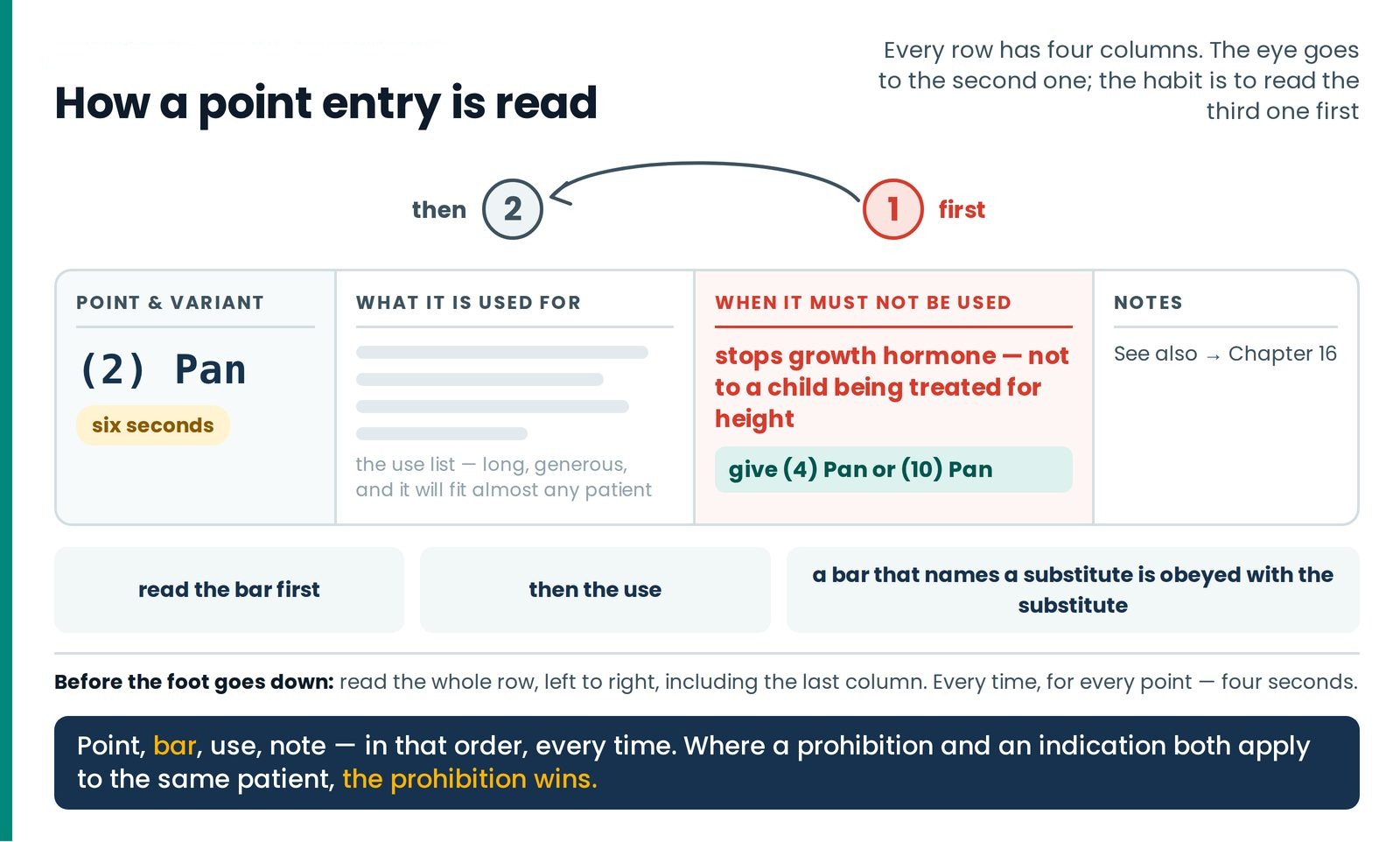
Second — read the right-hand column before the middle one. A therapist who reads the indications first will always find a reason to give a point; the list of uses is long and generous and some of it will fit almost any patient. Read the prohibitions first and you are asking the only question that can harm somebody: is there a reason this person must not have it? The story at the head of this article is that habit, arriving one week late. (Figure 25.2)
Third — a prohibition that names a substitute must be obeyed as written, substitute and all. Only a few entries do this, and they are the most useful lines in the article. Where Mu is forbidden, (4) Down arrow may be given in its place. Where (2) Pan is forbidden in a child being treated for height, (4) Pan or (10) Pan may be given. In heart patients, (2) Thrd is given in place of (4) Thrd. Where Gas Only must be given to a constipated patient, Gas 'I' must be given with it — and if the constipation is severe, (2) S4, S5 as well. A closed door with another door beside it is a rule a therapist can actually keep.
The three kinds of caution, and how each is to be treated
The caution reasoned from what the point does.
This point raises X; therefore withhold it where more X is harmful. (4) Adr raises blood sugar, so not in diabetes. Gas Only raises stomach acid, so not in ulcer. Gas 'I' increases the movement of the small intestine, so not in loose motions. Lu + Sh raises blood pressure, so not in high blood pressure or heart disease. Follow these, and learn the mechanism with them — the reason is the memory hook.
The caution learnt by watching. I saw this go wrong, and I do not know why. Gal in asthma increases the trouble — so it is not given. Gal is not given to those passing little urine, and the line attached to it says plainly: this is a matter of experience. Pan given to a patient with schizophrenia causes them to hear voices in the ears, so it is not given to them. These are the rarest and the most valuable kind, because nobody deduced them; somebody paid for them. Follow them exactly, and keep the same kind of record yourself.
The caution that protects a body still being built. (2) Pan stops growth hormone, so it is not given to a child whose height is less or who is under treatment to increase height. Lt. Ov. and Rt. Ov. are refused to the same child, because oestrogen and progesterone hasten the closure of the epiphyseal line of the long bones and the growth in height will stop before its time. These two are absolute and they are worth saying out loud to a parent, because a parent who understands them will not go looking for the treatment elsewhere.
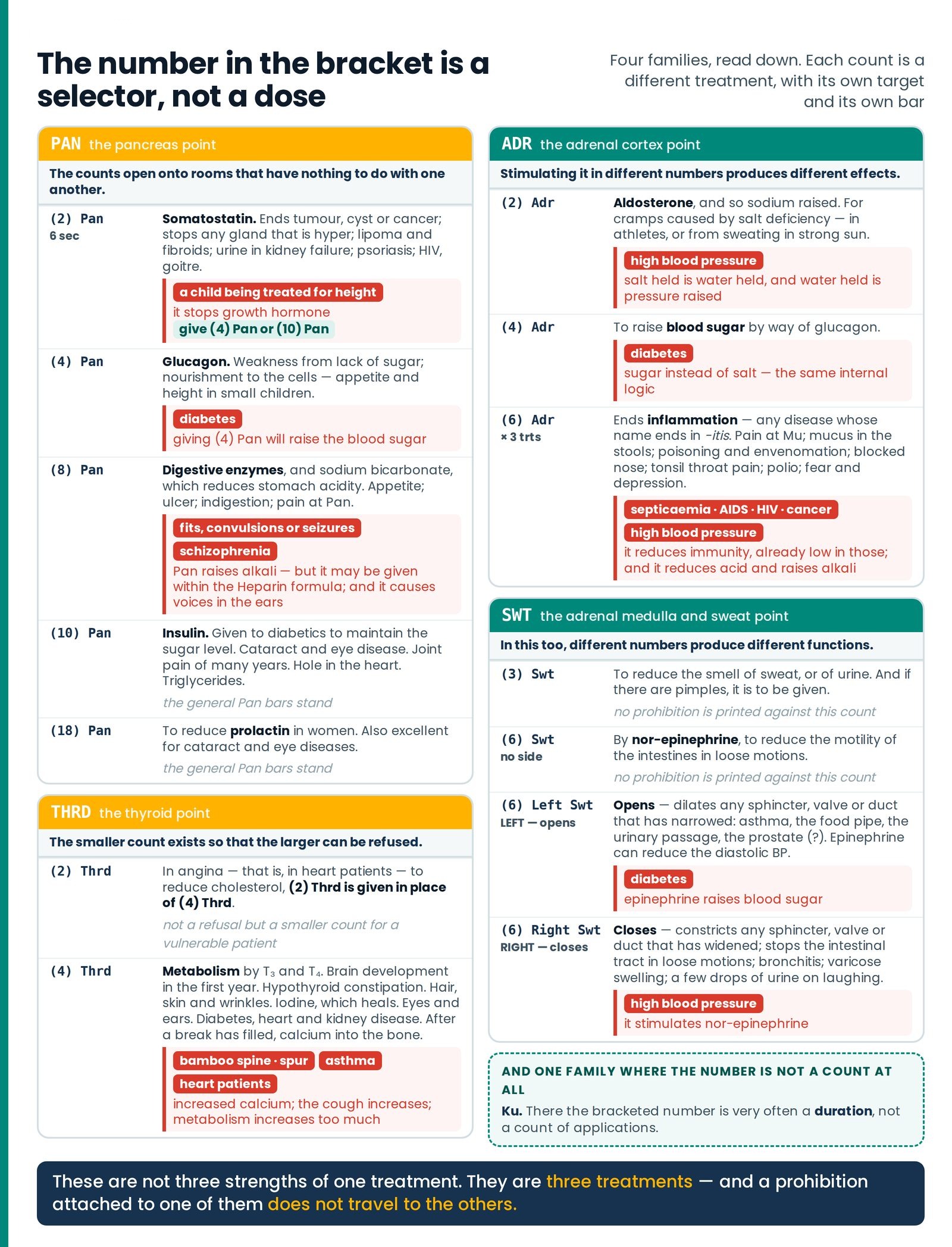
Thirty-two codes, in nine families. Each table gives the point and its variant, what it is used for, when it must not be used, and the notes attached to it — including the article where its method is taught, so that the reference and the atlas stay bound together. (Figure 25.1)
इस लेख को पढ़ना कैसे है
दाईं तरफ़ का ख़ाना पहले पढ़िए; कोष्ठक चुनाव बताता है, मात्रा नहीं
एटलस ने आपको क्रिया सिखाई थी। यह लेख आपको पूरा वाक्य सिखाता है।
पीठ के बल — 1: Pan, Gal, Spl, Liv, Mu, Gas, Const, Dys, WD, Liv°, Mu° से 24 ने कैसे का जवाब दिया: रोगी कहाँ लेटेगा, हाथ या पैर कहाँ जाएगा, कितनी बार, किस कोण पर, किस क्रम में। यही रोगी क्यों — इसका जवाब उन्होंने एक बार भी नहीं दिया। यह जान-बूझकर किया गया था। जो विद्यार्थी तरीक़े से पहले इस्तेमाल सीख लेता है, वह बीमारियाँ ढूँढ़ता फिरता है; जो तरीक़ा पहले सीखता है, उसके पास इस्तेमाल टाँगने के लिए खूँटी होती है।
अब वही टाँगने की बारी है, और उसके दो हिस्से हैं।
तीन आदतें इस लेख को सिर्फ़ लंबा नहीं, काम का बना देती हैं।
पहली — कोष्ठक में लिखा अंक चुनाव बताता है, मात्रा नहीं। पूरे लेख का सबसे ज़रूरी वाक्य यही है, और यह तीन अलग-अलग परिवारों के सिरे पर लिखा हुआ है। अलग-अलग अंकों में जगाने से अलग-अलग असर होता है। (2) Adr सोडियम (sodium) बढ़ाता है, इसलिए हाई ब्लड प्रेशर वाले रोगी को नहीं दिया जाता। (4) Adr ख़ून की शुगर बढ़ाता है, इसलिए डायबिटीज़ वाले को नहीं दिया जाता। (6) Adr सूजन-जलन (inflammation) घटाता है, इसलिए उसे नहीं दिया जाता जिसकी इम्यूनिटी (immunity) पहले ही गिरी हुई है। ये एक ही ट्रीटमेंट की तीन ताक़तें नहीं हैं। ये तीन ट्रीटमेंट हैं, और इनमें से एक पर लगी मनाही बाक़ी दोनों पर नहीं जाती।
दूसरी — बीच वाले ख़ाने से पहले दाईं तरफ़ वाला ख़ाना पढ़िए। जो थेरेपिस्ट पहले इस्तेमाल पढ़ता है, उसे पॉइंट देने की कोई न कोई वजह हमेशा मिल जाएगी; इस्तेमाल की सूची लंबी और उदार है, और उसमें से कुछ न कुछ लगभग हर रोगी पर बैठ जाता है। मनाही पहले पढ़िए, तो आप वही अकेला सवाल पूछ रहे होते हैं जिससे किसी का नुक़सान रुकता है: क्या कोई वजह है कि यह पॉइंट इस व्यक्ति को नहीं दिया जाना चाहिए? इस लेख के सिरे पर जो कहानी है, वह यही आदत है — एक हफ़्ता देर से आई हुई। (चित्र 25.2)
तीसरी — जो मनाही अपने साथ बदले का दूसरा पॉइंट भी बताती है, उसे पूरा का पूरा निभाइए — बदले वाला पॉइंट भी। ऐसा बहुत थोड़े ख़ानों में लिखा है, और वही इस लेख की सबसे काम की लाइनें हैं। जहाँ Mu मना है, वहाँ उसकी जगह (4) Down arrow दिया जा सकता है। जिस बच्चे का क़द बढ़ाने का ट्रीटमेंट चल रहा हो, उस पर (2) Pan मना है — वहाँ (4) Pan या (10) Pan दिया जा सकता है। दिल के रोगियों में (4) Thrd की जगह (2) Thrd दिया जाता है। कब्ज़ वाले रोगी को Gas Only देना ही पड़े, तो उसके साथ Gas 'I' देना ही है — और कब्ज़ सख़्त हो, तो (2) S4, S5 भी। बंद दरवाज़े के बग़ल में दूसरा दरवाज़ा खुला हो, तभी वह नियम थेरेपिस्ट सचमुच निभा पाता है।
तीन तरह की सावधानियाँ, और हर एक के साथ क्या करना है
वह सावधानी, जो पॉइंट के अपने काम से निकलती है।
यह पॉइंट X बढ़ाता है; इसलिए जहाँ X का और बढ़ना नुक़सान करे, वहाँ इसे रोक दीजिए। (4) Adr ख़ून की शुगर बढ़ाता है, इसलिए डायबिटीज़ में नहीं। Gas Only आमाशय (stomach) का एसिड बढ़ाता है, इसलिए अल्सर (ulcer) में नहीं। Gas 'I' छोटी आँत (small intestine) की चाल बढ़ाता है, इसलिए दस्त (loose motions) में नहीं। Lu + Sh ब्लड प्रेशर बढ़ाता है, इसलिए हाई ब्लड प्रेशर या दिल की बीमारी में नहीं। इन्हें मानिए, और इनके साथ इनका तरीक़ा भी सीखिए — वजह ही याद रखने की खूँटी है।
वह सावधानी, जो देखकर सीखी गई। मैंने इसे बिगड़ते देखा है, और वजह मुझे नहीं मालूम। अस्थमा में Gal देने से तकलीफ़ बढ़ जाती है — इसलिए वह नहीं दिया जाता। जिनका मूत्र कम आता है, उन्हें भी Gal नहीं दिया जाता, और उसके साथ लगी लाइन साफ़ कहती है: यह तजुर्बे की बात है। स्किज़ोफ़्रीनिया (schizophrenia) के रोगी को Pan देने से उसे कानों में आवाज़ें सुनाई देने लगती हैं, इसलिए उन्हें यह नहीं दिया जाता। ये सबसे कम मिलने वाली और सबसे क़ीमती सावधानियाँ हैं, क्योंकि इन्हें किसी ने तर्क से नहीं निकाला; इनकी क़ीमत किसी ने चुकाई है। इन्हें हू-ब-हू निभाइए, और ऐसा ही रिकॉर्ड आप भी रखिए।
वह सावधानी, जो अभी बन रहे शरीर की हिफ़ाज़त करती है। (2) Pan ग्रोथ हॉर्मोन (growth hormone) रोक देता है, इसलिए वह उस बच्चे को नहीं दिया जाता जिसका क़द कम है, या जिसका क़द बढ़ाने का ट्रीटमेंट चल रहा है। उसी बच्चे पर Lt. Ov. और Rt. Ov. भी नहीं दिए जाते, क्योंकि ईस्ट्रोजन (oestrogen) और प्रोजेस्टेरोन (progesterone) लंबी हड्डियों की एपिफ़िसियल लाइन (epiphyseal line) को जल्दी बंद कर देते हैं और क़द बढ़ना समय से पहले रुक जाता है। ये दोनों बातें बिना किसी छूट के हैं, और इन्हें माँ-बाप से बोलकर कहना चाहिए, क्योंकि जो माँ-बाप इन्हें समझ लेंगे, वे यह ट्रीटमेंट कहीं और ढूँढ़ने नहीं जाएँगे।
बत्तीस कोड, नौ परिवारों में। हर तालिका में पॉइंट और उसका रूप, वह किसलिए है, कब नहीं दिया जाएगा, और उसके साथ लगे नोट दिए गए हैं — उस लेख का नाम भी, जहाँ उसका तरीक़ा सिखाया गया है, ताकि यह सूची और एटलस एक-दूसरे से बँधे रहें। (चित्र 25.1)
Also explained inयहाँ भी समझाया गया है
- The two adrenal points — cortex and medullaएड्रिनल के दो पॉइंट — कॉर्टेक्स और मेडुला Each Point in Useहर पॉइंट: किस बीमारी में देना है और किसमें रोकना है
The mechanism and the prohibition are one thought (4) Adr To raise blood sugar by way of glucagon Do not give (4) Adr to diabetic patients ▲ Take care The same internal logic, applied to sugar instead of salt (6) Adr Us
- At a glanceपट्ट Each Point in Useहर पॉइंट: किस बीमारी में देना है और किसमें रोकना है
(2) Adr, (4) Adr and (6) Adr are three treatments with three different targets and three different bars, and a prohibition attached to one does not travel to the others.
- The warnings that shape a plan — blockingवे चेतावनियाँ जो प्लान की शक्ल तय करती हैं — ब्लॉकिंग From Findings to a Planनिष्कर्षों से निदान — पहली विज़िट का कार्ड कैसे बनता है
Table 2 — The conditions, and the points blocked in each Disease or condition Blocked points Autoimmune disorders, arthritis, inflammation / polio Th · Th+Ch · Lymph · Armpits · Ton 'P' · Ton 'T' · Spl Asthma Spl · Thrd
- When the order and the position pull against each otherजब क्रम और लिटाने का तरीक़ा एक-दूसरे को खींचते हैं How a Formula Is Builtपॉइंट से फ़ॉर्मूला कैसे बनता है — क्रम के पाँच नियम
(4) Mu° (4) Adr (4) Thrd The problem.
- Family five — Cancerपाँचवाँ परिवार — कैंसर When the Hand Must Stopडायबिटीज़, दिल, कैंसर, बवासीर — कहाँ हाथ रोकना है और कब डॉक्टर के पास भेजना है
· WD · (10) Medulla · Pit · (4) Adr · (6) Adr · (4) Pan · Spl ▲ Take care Blocked The reason as it is given Given instead Lt.
- How a formula gets built, watched from the insideफ़ॉर्मूला बनता कैसे है, भीतर से देखा हुआ Water and Saltब्लड प्रेशर, किडनी, पथरी, निमोनिया — LSTF, Round Normal, Lactic Acid, Angiotensin
(4) Mu° (4) Thrd (4) Adr What it is for Severe constipation (sakht kabzī) · Bamboo spine · pains in the left side of the body Positions, in order Supine for steps 1–6 Supine → prone for step 7 Prone .
- Diabetesकिडनी की बीमारियाँ (kidney disorders) When the Hand Must Stopडायबिटीज़, दिल, कैंसर, बवासीर — कहाँ हाथ रोकना है और कब डॉक्टर के पास भेजना है
Blocked: Th · Th+Ch · Spl · Lymph · Armpits · Ton 'P' · Ton 'T' · Pit · (4) Adr · (6) Adr · (4) Pan · (10) Medulla ▲ Take care The longest list in the therapy, and the one a village therapist will use most often.
- Why the sequence mattersक्रम क्यों मायने रखता है Six Secondsछह सेकंड — प्रेशर कितनी देर, कितनी बार, कितने दिन
(4) Mu⁰ (4) Thrd (4) Adr — and every position has a reason.
- The diagnosis cardनिदान कार्ड From Findings to a Planनिष्कर्षों से निदान — पहली विज़िट का कार्ड कैसे बनता है
BLOCKED — marked before treatment is planned ▲ Take care Diabetes: Th · Th+Ch · Spl · Lymph · Armpits · Ton 'P' · Ton 'T' · Pit · (4) Adr · (6) Adr · (4) Pan · (10) Medulla Constipation: Gas Only · (10) Medulla · Dys
- The central teaching of this articleइस लेख की सबसे बड़ी शिक्षा The Medulla Familyदिल, पार्किंसन, बाँझपन — Medulla परिवार के नौ फ़ॉर्मूले
(6) Adr really is more than (4) Adr.
- The adrenal cortex, T6, and the finding of (6) Adrएड्रिनल कॉर्टेक्स (adrenal cortex), T6, और (6) Adr का मिलना Fire and Swellingसूजन, इन्फ़ेक्शन, चोट और पोलियो — Adr, ITF और थायरॉइड ऐस्टरिस्क
(4) Adr raises blood sugar through glucagon and is withheld in diabetes.
- The compromise in the tail, stated with its priceपूँछ में किया गया समझौता, अपनी क़ीमत के साथ Water and Saltब्लड प्रेशर, किडनी, पथरी, निमोनिया — LSTF, Round Normal, Lactic Acid, Angiotensin
(4) Mu° (4) Adr (4) Thrd But in doing so there is a problem.
- The article in one table — finding to formulaपूरा लेख एक ही तालिका में — निष्कर्ष से फ़ॉर्मूला तक Water and Saltब्लड प्रेशर, किडनी, पथरी, निमोनिया — LSTF, Round Normal, Lactic Acid, Angiotensin
(4) Mu° (4) Thrd (4) Adr Ordinary constipation Round Normal — (1) Rt.
- At a glanceइस लेख को जो तस्वीरें चाहिए Water and Saltब्लड प्रेशर, किडनी, पथरी, निमोनिया — LSTF, Round Normal, Lactic Acid, Angiotensin
(4) Mu° (4) Thrd (4) Adr — for severe constipation, bamboo spine, and pains in the left side of the body.
Watchवीडियो देखिए

