- Organsअंग
- Heartहृदय (दिल) · Bloodख़ून (रक्त) · Blood vesselsरक्त नलियाँ
Watchवीडियो देखिए

Fromस्रोत The Low Backकमर और साइटिका — L3-4-5, JJ, Sciatica Point और Sciatica Setting
BLOOD SUPPLY TO SIDES — its own entry
The same sole, the same sweep, at the hip — to relax the muscles around it
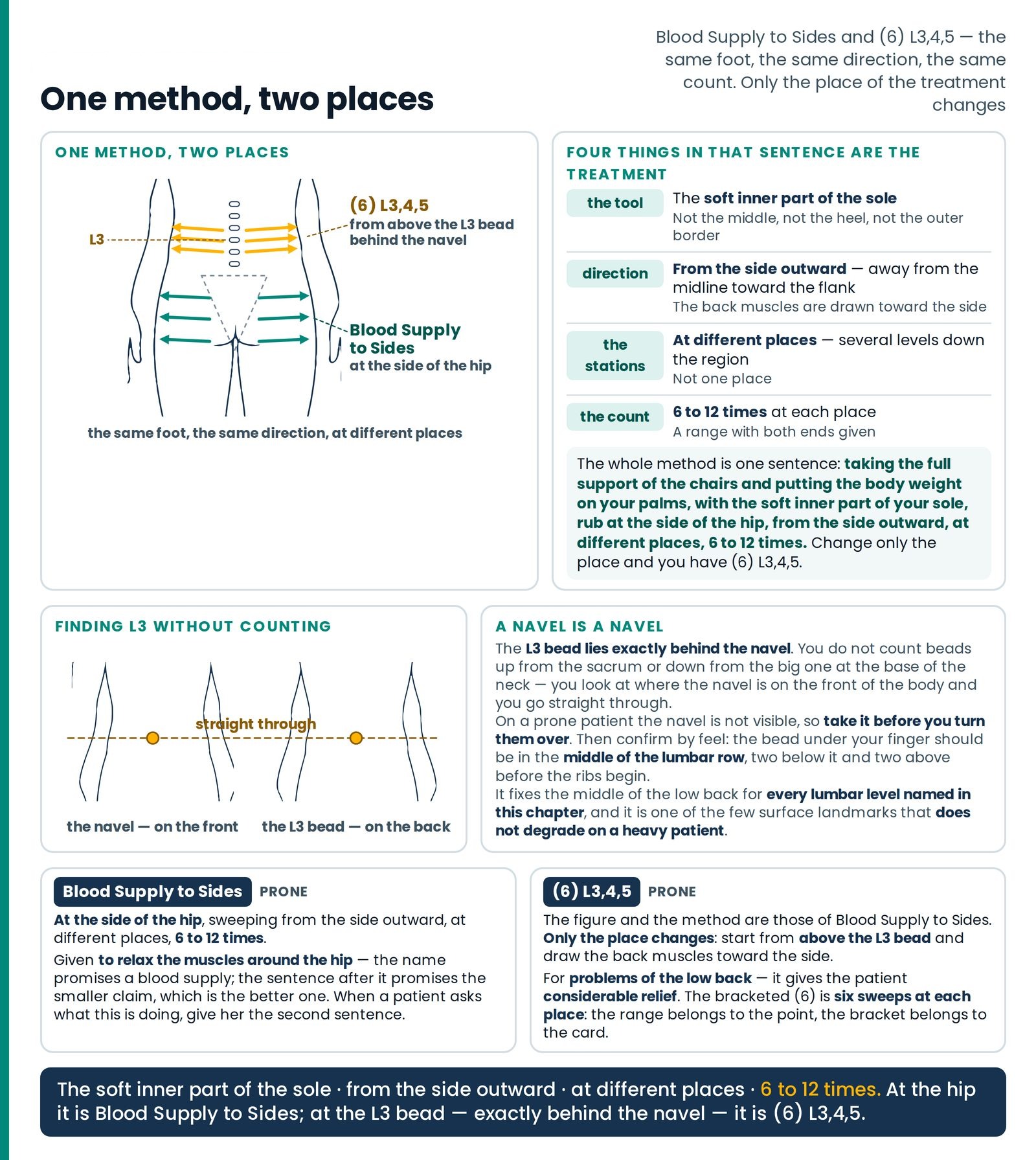
The method was taught in full above, because (6) L3,4,5 cannot be given without it. Here is the point in its own right, with the indication that belongs to it. (Figure 22.3)
Taking the full support of the chairs and putting the body weight on your palms, with the soft inner part of your sole, rub at the side of the hip, from the side outward, at different places, 6 to 12 times. It is given to relax the muscles around the hip.
| Patient's position | Prone, 1½ pillows; therapist taking the full support of the chairs, body weight on the palms Prone |
|---|---|
| Where the feet are placed | The soft inner part of the sole, at the side of the hip, sweeping from the side outward, at different places |
| Duration and repetitions | 6 to 12 times at each place |
| What it is for | Relaxing the muscles around the hip |
Note the modesty of the stated purpose and keep it. The name promises a blood supply; the sentence after it promises relaxed muscles around the hip, which is the smaller claim and the better one. When a patient asks what this is doing, give her the second sentence.
BLOOD SUPPLY TO SIDES — अपनी जगह पर, अपने नाम से
वही तलवा, वही घिसाई, अब नितंब पर — उसके आसपास की मांसपेशियाँ ढीली करने के लिए
तरीक़ा ऊपर पूरा का पूरा सिखाया जा चुका है, क्योंकि उसके बिना (6) L3,4,5 दिया ही नहीं जा सकता। अब यह पॉइंट अपने नाम से सामने है, उसी बीमारी के साथ जो इसी की है। (चित्र 22.3)
चेयरों का पूरा सहारा लेकर शरीर का वज़न अपनी हथेलियों पर डालिए, और अपने तलवे के नरम भीतरी हिस्से से नितंब की बग़ल में, बग़ल से बाहर की तरफ़, अलग-अलग जगहों पर, 6 से 12 बार घिसाई कीजिए। यह नितंब के आसपास की मांसपेशियाँ ढीली करने के लिए दिया जाता है।
| रोगी की स्थिति | पेट के बल, 1½ पिलो; थेरेपिस्ट चेयरों का पूरा सहारा लेकर, शरीर का वज़न हथेलियों पर पेट के बल |
|---|---|
| पैर कहाँ रखे जाते हैं | तलवे का नरम भीतरी हिस्सा, नितंब की बग़ल में, घिसाई बग़ल से बाहर की तरफ़, अलग-अलग जगहों पर |
| कितनी देर और कितनी बार | 6 से 12 बार हर जगह पर |
| यह किसलिए है | नितंब के आसपास की मांसपेशियाँ ढीली करना |
जो काम बताया गया है, उसकी नपी-तुली हद पर ध्यान दीजिए और उसे वैसा ही रहने दीजिए। नाम ख़ून की सप्लाई का वादा करता है; उसके बाद वाला वाक्य नितंब के आसपास की ढीली मांसपेशियों का वादा करता है — यह छोटा दावा है, और यही बेहतर है। रोगी पूछे कि इससे हो क्या रहा है, तो उसे दूसरा वाला वाक्य दीजिए।
Fromस्रोत The Low Backकमर और साइटिका — L3-4-5, JJ, Sciatica Point और Sciatica Setting
BLOOD SUPPLY TO LEGS — the stance that faces the wrong way
The one treatment given facing the heels, 30 to a thigh, crossed feet
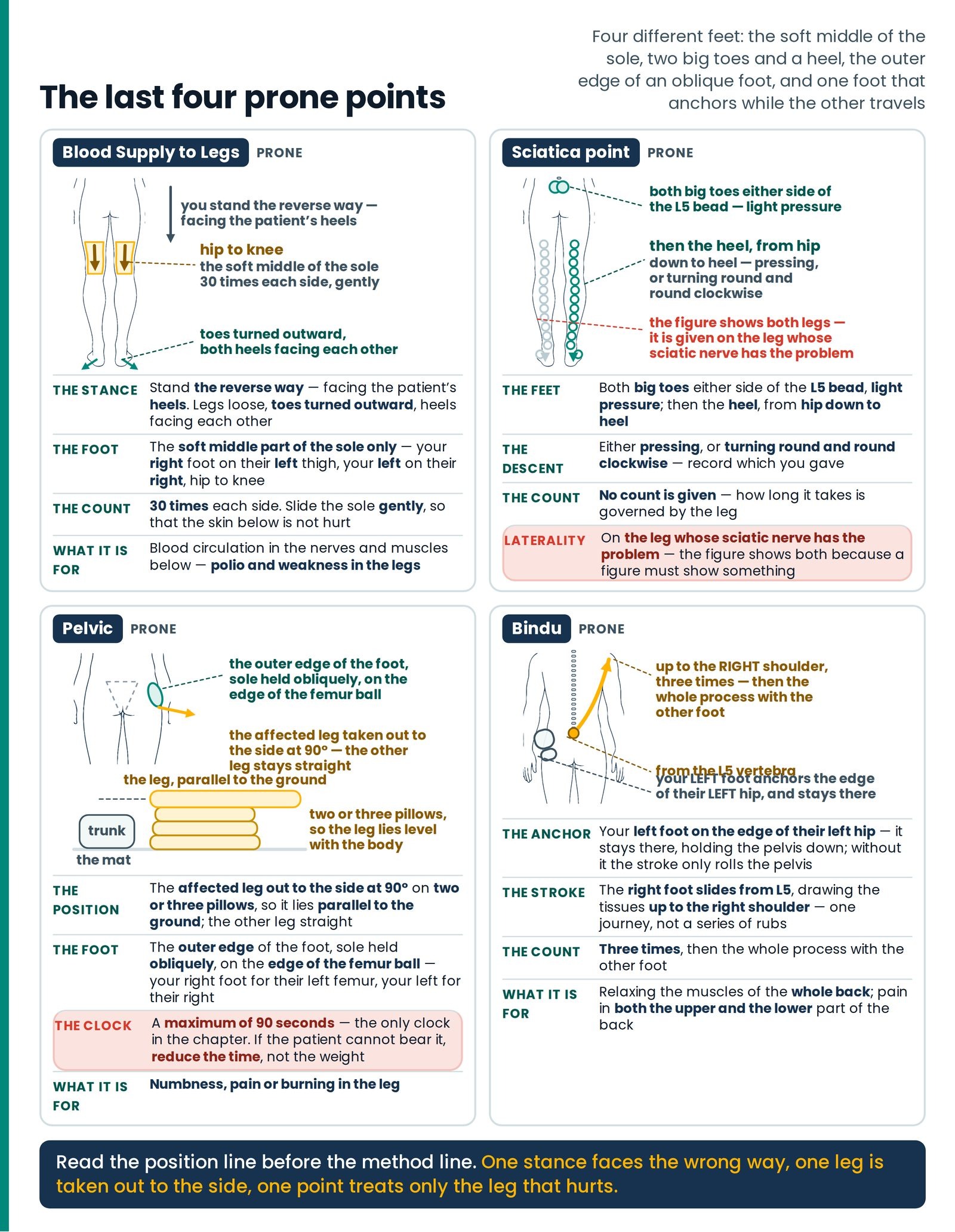
Note that in this treatment there is one main change in the therapist's standing position. Taking the support of the chairs, stand the reverse way compared with the other treatments — that is, facing toward the patient's heels. The treatment is given with the soft middle part of the sole only. Prone Left Right (Figure 22.5)
Tell them to keep their legs loose, the toes turned outward, and both heels facing each other. Now, on the back of their left thigh, with your right foot, rub from hip to knee 30 times. Then with your left foot, rub their right thigh in the same way, 30 times. Each time, slide the sole gently, so that the skin below is not hurt, but the blood circulation in the nerves and muscles below is increased.
This is an excellent treatment for polio and for weakness in the legs.
When writing it on the card, its symbol is → → → an inverted triangle marked 30, with two downward arrows beneath it.
| Patient's position | Prone, 1½ pillows; legs loose, toes turned outward, both heels facing each other. Therapist taking the support of the chairs, standing the reverse way — facing the patient's heels Prone |
|---|---|
| Where the feet go | The soft middle part of the sole only, back of the thigh, hip to knee — your right foot on their left thigh, your left foot on their right Left Right |
| Duration and repetitions | 30 times each side. Slide the sole gently, so that the skin below is not hurt |
| What it is for | Increasing blood circulation in the nerves and muscles below; an excellent treatment for polio and for weakness in the legs |
The reverse stance has a reason you feel at once: the sweep runs hip to knee, away from you, and a foot pushing away has a long clean travel where a foot pulling toward the body runs out of range in a hand's breadth. The crossing is written too — the crossed foot is the one that arrives square on the muscle and can travel the whole thigh.
The patient's position is half the treatment. Legs loose, toes turned outward, heels facing each other rolls both thighs outward at the hip and slackens the back-of-thigh muscles, so the sole rides soft bellies rather than a drawn bowstring. And gently is load-bearing: thirty repetitions with a therapist's whole weight available is a great deal, and the instruction names its own limit — so that the skin below is not hurt. The check is the skin. Pink is treated; scuffed, hot or marked is dragged.
What lies beneath, and the honest boundary. The sweep covers the three muscles at the back of the thigh, from the sitting bone to below the knee, with the great sciatic nerve running down the middle between them. For a weak leg, no amount of rubbing substitutes for using the muscle — what rebuilds a weak muscle is loading it and practising the task. What a slow thirty-stroke sweep gives is a leg less stiff, less sore and more willing to be moved, and a patient more willing to move it. Say it at that size and it is entirely true, and worth giving every day.
BLOOD SUPPLY TO LEGS — वह खड़ा होना, जो उल्टी तरफ़ मुँह किए होता है
इकलौता ट्रीटमेंट जो एड़ियों की तरफ़ मुँह करके दिया जाता है — एक जाँघ पर 30, और पैर आड़े
ध्यान रखिए, इस ट्रीटमेंट में थेरेपिस्ट के खड़े होने के तरीक़े में एक बड़ा फ़र्क़ है। चेयरों का सहारा लेकर, बाक़ी ट्रीटमेंट के मुक़ाबले उल्टी तरफ़ खड़े होइए — यानी रोगी की एड़ियों की तरफ़ मुँह करके। यह ट्रीटमेंट सिर्फ़ तलवे के नरम बीच वाले हिस्से से दिया जाता है। पेट के बल बायाँ दायाँ (चित्र 22.5)
उनसे कहिए कि टाँगें ढीली छोड़ दें, पैर की उँगलियाँ बाहर की तरफ़ कर लें, और दोनों एड़ियाँ आमने-सामने रखें। अब उनकी बाईं जाँघ के पीछे, अपने दाएँ पैर से, नितंब से घुटने तक 30 बार घिसाई कीजिए। फिर अपने बाएँ पैर से उनकी दाईं जाँघ पर उसी तरह, 30 बार। हर बार तलवे को धीरे से सरकाइए, ताकि नीचे की त्वचा को चोट न पहुँचे, पर नीचे की नसों और मांसपेशियों में ख़ून का दौरा (blood circulation) बढ़ जाए।
पोलियो (polio) और टाँगों की कमज़ोरी के लिए यह बहुत बढ़िया ट्रीटमेंट है।
कार्ड पर लिखते वक़्त इसका चिह्न है → → → उल्टा ट्रायंगल, जिस पर 30 लिखा है, और उसके नीचे नीचे की तरफ़ दो तीर।
| रोगी की स्थिति | पेट के बल, 1½ पिलो; टाँगें ढीली, पैर की उँगलियाँ बाहर की तरफ़, दोनों एड़ियाँ आमने-सामने। थेरेपिस्ट चेयरों का सहारा लेकर उल्टी तरफ़ खड़ा — रोगी की एड़ियों की तरफ़ मुँह करके पेट के बल |
|---|---|
| पैर कहाँ रखे जाते हैं | सिर्फ़ तलवे का नरम बीच वाला हिस्सा, जाँघ के पीछे, नितंब से घुटने तक — आपका दायाँ पैर उनकी बाईं जाँघ पर, आपका बायाँ पैर उनकी दाईं पर बायाँ दायाँ |
| कितनी देर और कितनी बार | हर तरफ़ 30 बार। तलवे को धीरे से सरकाइए, ताकि नीचे की त्वचा को चोट न पहुँचे |
| यह किसलिए है | नीचे की नसों और मांसपेशियों में ख़ून का दौरा बढ़ाना; पोलियो और टाँगों की कमज़ोरी के लिए बहुत बढ़िया ट्रीटमेंट |
उल्टी तरफ़ खड़े होने की वजह आपको पहली ही बार में महसूस हो जाती है: घिसाई नितंब से घुटने की तरफ़ चलती है, यानी आपसे दूर की तरफ़; और दूर धकेलता हुआ पैर लंबा-साफ़ रास्ता तय कर लेता है, जबकि अपनी तरफ़ खींचता हुआ पैर एक हथेली भर चलकर ही ख़त्म हो जाता है। पैरों का आड़ा होना भी लिखा हुआ है — आड़ा पड़ने वाला पैर ही मांसपेशी पर सीधा बैठता है और पूरी जाँघ तय कर पाता है।
रोगी की स्थिति आधा ट्रीटमेंट है। टाँगें ढीली, पैर की उँगलियाँ बाहर की तरफ़, एड़ियाँ आमने-सामने — इससे दोनों जाँघें नितंब पर बाहर की तरफ़ लुढ़क जाती हैं और जाँघ के पीछे की मांसपेशियाँ ढीली पड़ जाती हैं; तलवा तनी हुई डोरी पर नहीं, नरम गद्दों पर चलता है। और धीरे से अपने ऊपर पूरा बोझ उठाए हुए है: थेरेपिस्ट का पूरा वज़न मौजूद हो और तीस बार दोहराया जाए — यह कम नहीं होता; इसीलिए निर्देश अपनी हद ख़ुद बता देता है — ताकि नीचे की त्वचा को चोट न पहुँचे। जाँच त्वचा ही है। गुलाबी है, तो ट्रीटमेंट हुआ; छिल गई, गरम हो गई या निशान पड़ गए, तो घसीटा गया है।
नीचे क्या पड़ा है, और ईमानदार हद क्या है। यह घिसाई जाँघ के पीछे की तीन मांसपेशियों के ऊपर से गुज़रती है, बैठने वाली हड्डी से लेकर घुटने के नीचे तक; और इन्हीं के बीच से होकर बड़ी साइटिक नस नीचे उतरती है। कमज़ोर टाँग में कितनी भी घिसाई कर लीजिए, वह मांसपेशी को इस्तेमाल करने की जगह नहीं ले सकती — कमज़ोर मांसपेशी को दोबारा बनाता है उस पर बोझ डालना और वही काम बार-बार करना। धीमी तीस घिसाइयों से जो मिलता है, वह यह है: टाँग कम अकड़ी हुई, कम दुखती हुई, हिलने के लिए ज़्यादा तैयार — और रोगी भी उसे हिलाने के लिए ज़्यादा तैयार। इसी नाप पर कहिए, तो बात पूरी तरह सच है, और रोज़ देने लायक़ भी।
Also explained inयहाँ भी समझाया गया है
- Why a chemical made by a pair of hands might reach the brain when an injection cannotदो हाथों से बना एक केमिकल दिमाग़ तक क्यों पहुँच सकता है, जबकि इंजेक्शन नहीं पहुँच पाता The River — Heparinलकवा, हार्ट अटैक, ख़ून के थक्के — P. Heparin, A. Heparin, G. Heparin
When a blow has landed, then after the wound has dried, to increase the blood circulation at that place, this is to be given.
- The three levelsतीन स्तर The Fire and the Ashगठिया, सोरायसिस, थकान — बिना पचा खाना (UDF) जड़ कैसे बनता है
They increase the blood circulation in the stomach, from which the discharge of hydrochloric acid, pepsin and the other secretions of the stomach increases.
- The knee and the lower limbघुटना और टाँग Each Point in Useहर पॉइंट: किस बीमारी में देना है और किसमें रोकना है
Blood supply to legs — for polio Given to increase blood circulation in the arteries of the legs of polio patients.
- Where the bath meets the mealजहाँ नहाना और खाना आमने-सामने आते हैं Between Two Sessionsदो सिटिंग के बीच — सोना, उठना, नहाना और परहेज़ के नियम
At that time the blood circulation remains more towards the skin and not towards the other organs.
- The master list — every treatment point, by the position the patient is placed inमास्टर लिस्ट — हर ट्रीटमेंट पॉइंट, उस पोज़ीशन के हिसाब से जिसमें रोगी को रखा जाता है The Shorthandकोड और चिह्न — फ़ॉर्मूला की लाइन पढ़ना
Code Full name / Hindi Where it is taught in this wiki Adr Adrenal Face Down Swt Sweat Face Down Back Arrow Back Arrow, or Blood supply to lungs Face Down H arrow — Face Down On the spine — Face Down Beside the spine — Face Down Round arrow —
- One supply, shared outसप्लाई एक ही है, और वही बँटती है The Body's Own Pharmacyशरीर की अपनी दवा की दुकान — हॉर्मोन, एंज़ाइम और ग्रंथियाँ
It is a fixed volume, in constant circulation, being distributed among all the organs at once.
- One name this article does not answer toएक नाम, जिसका जवाब यह लेख नहीं देता Clearing the Ashकैंसर, डायबिटीज़, गठिया — बिना पचा खाना निकालने के UDF फ़ॉर्मूले
The three levels every UDF formula works at: the blood circulation in the stomach, so that HCl and pepsin increase; the circulation in gall bladder, liver, pancreas and small intestine, so that digestion, absorption and
- Liver, kidney and lung — how the formula was builtलीवर, किडनी और फेफड़ा — फ़ॉर्मूला कैसे बना Water and Saltब्लड प्रेशर, किडनी, पथरी, निमोनिया — LSTF, Round Normal, Lactic Acid, Angiotensin
Not only that — the lungs and the liver have one further quality, that some blood remains stored within them, which both of them can bring into the circulation when there is need.
- The Oxygen formulaOxygen फ़ॉर्मूला Water and Saltब्लड प्रेशर, किडनी, पथरी, निमोनिया — LSTF, Round Normal, Lactic Acid, Angiotensin
Only Supine To clean the lungs 2 (6) ←→ — Stretch Opens the muscles of the neck so that one can breathe well 3 (6) \°/ — Back Arrow Prone To increase the supply of blood to the lungs 4 (3) ↑o↑ — H Arrow Prone So that
- The organs of digestion — the key to healthपाचन के अंग — सेहत की चाबी The Body's Own Pharmacyशरीर की अपनी दवा की दुकान — हॉर्मोन, एंज़ाइम और ग्रंथियाँ
They slowly narrow, the circulation is obstructed, and from that come disorders of the heart, of the kidney and much else.
- Every symbol, and how to say it in wordsहर चिह्न, और उसे शब्दों में कैसे बोलेंगे The Shorthandकोड और चिह्न — फ़ॉर्मूला की लाइन पढ़ना
(Figure 14.2) Table 10 — The written symbols and their names (first plate) Symbol (described) Code Full name A small circle flanked by inward-leaning strokes — \ ° / Back Arrow Back Arrow, or Blood supply to lungs Two
- BACK ARROW — बेक एरो Face Downपेट के बल — Adr, Swt, Back Arrow, H Arrow, Round Arrow, KU, बवासीर का ट्रायंगल
Its other name is Blood supply to lungs, because it increases blood circulation in the lungs.
- The head and the faceसिर और चेहरा Each Point in Useहर पॉइंट: किस बीमारी में देना है और किसमें रोकना है
They benefit greatly from this treatment — Hammering Seated To increase the circulation of blood inside the brain, a towel is placed on the head and it is struck lightly with a special kind of soft hammer.
- Reading OLD UDF point by pointOLD UDF को पॉइंट दर पॉइंट पढ़ना Clearing the Ashकैंसर, डायबिटीज़, गठिया — बिना पचा खाना निकालने के UDF फ़ॉर्मूले
What they are for: to provoke the whole digestive system through the vagus nerve; and to increase blood supply in the stomach.