The chair stays; the hands move up onto the head and the face
The seated group does not end here. After Necklace the atlas turns to the head and the face — the rubbing of the visual areas at the back of the skull, the light tapping given through a folded towel, the shoulder-blade treatment, the facial points, the teeth , the jaw, the tear points, the sinuses , the treatment for headache given from behind, and the ear points . Those are taught together in Seated II — Face, Jaw, Ear, Sinus , "Seated — II"
One whole layer of every point here has also been left out on purpose: what each is used for, and when it must not be used. That is Each Point in Use , "Each Point in Use"
धीरे-धीरे रे मना, धीरे सब कुछ होय। "Slowly, slowly, O mind — slowly everything happens."
traditional
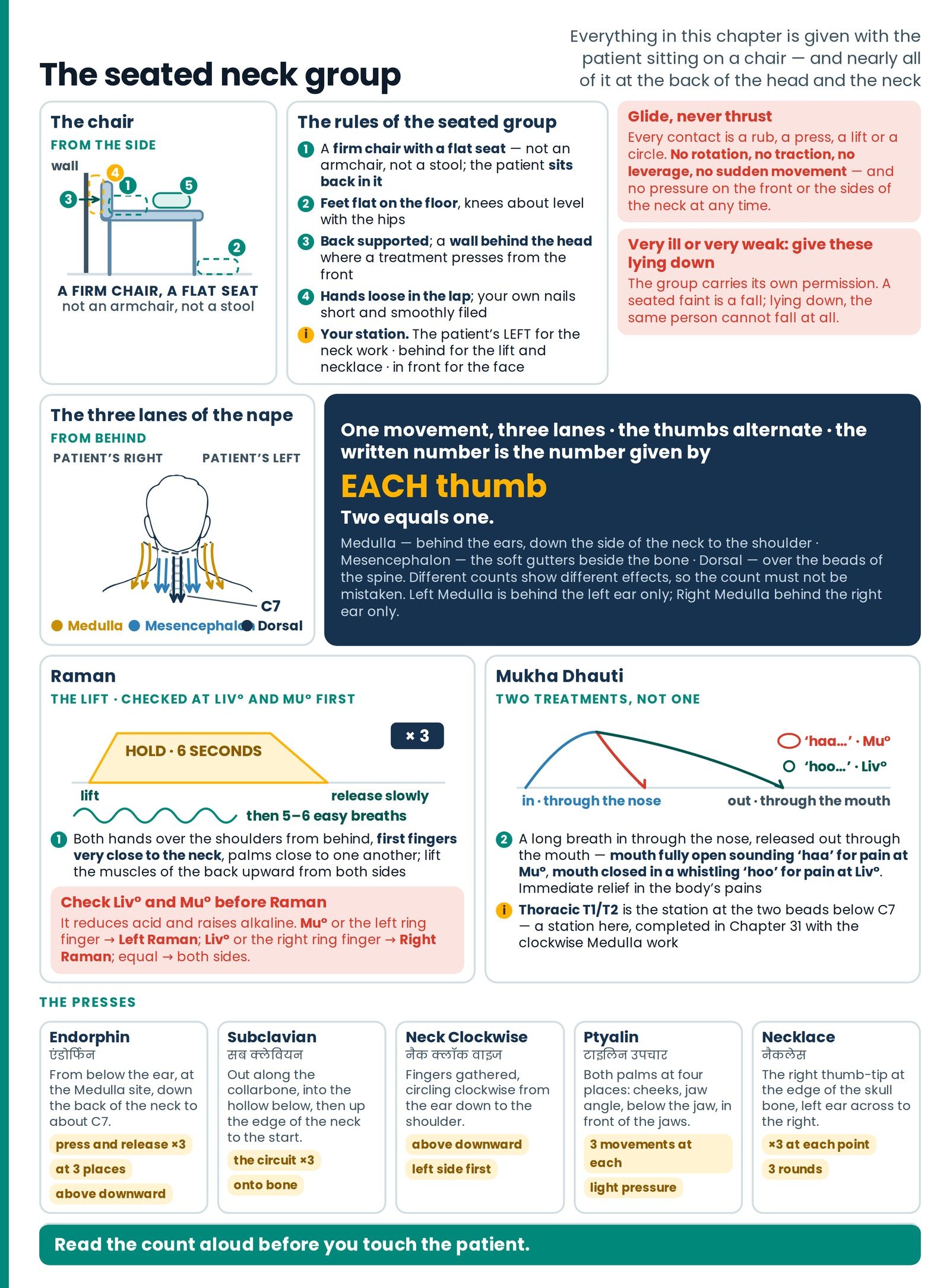
WHAT TO CARRY AWAY The seated group is given on a firm flat chair — sitting back in it, feet flat, back supported, hands loose. If the patient is very ill or very weak, these treatments may also be given lying down.
Glide, never thrust. No rotation, no traction, no leverage, no sudden movement. The steadying hand steadies; it never levers. The anterior-neck rule of The Front of the Body II governs this whole article — and the front border of the big strap muscle is the fence for Subclavian , Neck Clockwise and Necklace.
Medulla , Mesencephalon and Dorsal are one movement in three lanes — behind the ears and down the side; the soft gutters beside the bone; the beads themselves. In all three the thumbs alternate and the written number is the number given by EACH thumb. Two equals one.
Medulla: therapist on the patient's LEFT, palm made round over both sides of the neck, both thumbs behind the ears below the skull bone, soft pads down the side of the neck to the shoulder — then the same behind the right ear. Left Medulla is behind the left ear only; Right Medulla behind the right ear only. Different counts show different effects, so the count must not be mistaken — the graded series is named by its count and is taught in The Medulla Family .
Raman : both hands from behind, first fingers very close to the neck, palms close together, lift the muscles of the back from both sides, hold 6 seconds, release slowly, three times — then 5–6 easy breaths.
Raman reduces acid and raises alkaline, so it is given only after checking Liv° and Mu° . More pain at Mu° and little or none at Liv°: it may be given. Pain at Liv° and none at Mu°: given without checking, the pain can increase very much. Mu° or the left ring finger → Left Raman; Liv° or the right ring finger → Right Raman; equal in both → both sides.
Mukha Dhauti is two treatments, not one. Long breath in through the nose , out through the mouth — open mouth, 'haa' for Mu° pain ; closed mouth, whistling 'hoo' for Liv° pain . Endorphin starts where Medulla starts and goes the other way — down the back of the neck to about C7, press and release three times at each of three places, above downward.
Subclavian is a closed circuit three times round — collarbone out to the shoulder, into the hollow below and back toward the neck, up the edge of the neck to the start; press onto bone, never deep into the hollow. Neck Clockwise: fingers gathered into a pad, clockwise from ear to shoulder, above downward, left side first. Ptyalin : four stations, three movements at each, light pressure — and a lump in a salivary gland is never treated.
Necklace: left hand steadying the head so the forehead does not move; the right thumb-TIP at the edge of the skull bone, four fingers open and upward; press three times at many closely spaced points from behind the left ear across to the right ear; three rounds, from right to left.
Thoracic T1/T2 is the two beads below C7 — a station here, completed in The Medulla Family with the clockwise Medulla work.
The seated neck group. The whole article as one portrait poster in four bands: the chair and the rules with the two red prohibitions, the three lanes with the counting convention in the largest type here, Raman and Mukha Dhauti with the Liv-zero and Mu-zero check, and a compact strip of the five presses with their counts as chips. चेयर वहीं रहती है; हाथ ऊपर उठकर सिर और चेहरे पर चले जाते हैं
बैठे हुए वाला समूह यहाँ ख़त्म नहीं होता। नैकलेस के बाद एटलस सिर और चेहरे की तरफ़ मुड़ जाता है — खोपड़ी के पिछले हिस्से में नज़र वाले इलाक़ों की घिसाई, मोड़े हुए तौलिए के ऊपर से दी जाने वाली हल्की थपकी, कंधे की चौड़ी हड्डी का ट्रीटमेंट, चेहरे के पॉइंट, दाँत, जबड़ा, आँसू वाले पॉइंट, साइनस (sinus ), पीछे से दिया जाने वाला सिरदर्द का ट्रीटमेंट, और कान के पॉइंट। ये सब एक साथ बैठे हुए — 2: चेहरा, जबड़ा, कान, साइनस — Bell's Palsy, Shivaji, Satnam , "बैठे हुए — 2: चेहरा, जबड़ा, कान, साइनस — Bell's Palsy , Shivaji , Satnam " में सिखाए गए हैं, क्योंकि इन सबकी पोज़ीशन एक है, निशानियाँ एक हैं, और सावधानियाँ भी अपनी एक हैं।
यहाँ के हर पॉइंट की एक पूरी परत जान-बूझकर छोड़ दी गई है: कौन-सा पॉइंट किसमें काम आता है, और कब उसे बिलकुल नहीं देना। वह हर पॉइंट: किस बीमारी में देना है और किसमें रोकना है , "हर पॉइंट: किस बीमारी में देना है और किसमें रोकना है"
धीरे-धीरे रे मना, धीरे सब कुछ होय। "धीरे-धीरे, ऐ मन — हर चीज़ धीरे-धीरे ही होती है।"
पारंपरिक कहावत
पट्ट — Medulla : गोल बनी हथेली, कानों के पीछे दोनों अंगूठे · पट्ट — और इसे दोबारा बनाने का प्रॉम्प्ट कैप्शन: Medulla की पहली घिसाई। थेरेपिस्ट रोगी की बाईं तरफ़ खड़ा है, उसकी हथेली रोगी की गर्दन के दोनों बग़लों पर गोल बनी हुई है, और दोनों अंगूठे उसके कानों के पीछे, खोपड़ी की हड्डी के किनारे के ठीक नीचे रखे हैं। बाएँ अंगूठे का नरम गद्दा गर्दन के बग़ल से नीचे की तरफ़ अपना सफ़र शुरू कर रहा है। उसके पैर ज़मीन पर सपाट हैं, पीठ चेयर से टिकी है, हाथ गोद में ढीले पड़े हैं। कोई भी अंगूठा उसकी गर्दन के अगले हिस्से पर नहीं है।
ChatGPT का इमेज प्रॉम्प्ट — रेफ़रेंस फ़ोटो साथ लगाकर यह चिपकाइए:
साथ लगी फ़ोटो को थेरेपी विकी के लिए एक साफ़-सुथरी, आधुनिक और गरम रोशनी वाली सिखाने वाली तस्वीर की तरह दोबारा बनाइए। इसमें से ये चीज़ें हू-ब-हू उतारिए: दोनों मॉडलों का शरीर-गठन और अनुपात, रंग, बाल, कपड़े और उनका रंग तथा गिरन, चेयर, फ़र्श, दीवारें, और कमरे की रोशनी। किसी भी चीज़ को नए सिरे से गढ़ना नहीं है; सिर्फ़ साफ़-सफ़ाई बेहतर होनी चाहिए।
[साथ लगी फ़ोटो का ब्यौरा — भेजने से पहले भरिए: रोगी का डील-डौल और उम्र ___ ; रंग ___ ; बाल ___ ; कपड़ा और उसका रंग ___ ; चेयर ___ ; फ़र्श ___ ; दीवार ___ ; थेरेपिस्ट का डील-डौल, उम्र और पहनावा ___ ; रोशनी ___ .]
पोज़ीशन, ठीक-ठीक: रोगी एक मज़बूत, सपाट सीट और सीधी पीठ वाली चेयर में पीछे तक टिककर बैठी है — न आरामकुर्सी, न स्टूल — और उसे पीछे से, ज़रा उसकी बाईं तरफ़ से देखा जा रहा है। पैर ज़मीन पर सपाट, घुटने क़रीब-क़रीब कूल्हों की सीध में; पीठ चेयर की पीठ से टिकी हुई; हाथ गोद में ढीले; सिर सीधा और एकदम सामने की तरफ़, न घुमा हुआ और न झुका हुआ; बाल गर्दन के पीछे से हटाकर बाँधे हुए।
हाथ कहाँ-कहाँ रखे हैं, ठीक-ठीक: थेरेपिस्ट रोगी की बाईं तरफ़ खड़ा है, पास, पर उस पर झुका हुआ नहीं, कंधे नीचे और बराबर। उसकी हथेली गोल बनी हुई है, रोगी की गर्दन के दोनों बग़लों को कटोरे की तरह लिए हुए, पर पकड़े बिना। दोनों अंगूठे उसके कानों के पीछे, खोपड़ी की हड्डी के किनारे के ठीक नीचे टिके हैं। बाएँ अंगूठे का नरम गद्दा यहाँ अपनी घिसाई के बीच में दिख रहा है — गर्दन के बग़ल से नीचे की तरफ़ जाता हुआ; दायाँ अंगूठा अभी अपनी शुरुआती जगह पर ठहरा है। नाख़ून छोटे, कलाइयाँ सीधी।
इनमें से कुछ भी मत डालिए: गर्दन के अगले हिस्से या गले पर कोई छुआव; घुमाया हुआ, झुकाया हुआ या खींचा हुआ सिर; गर्दन में गड़ी हुई उँगलियों की नोकें; लंबे नाख़ून; तेल, तौलिए, दस्ताने या मशीनें; आरामकुर्सी या स्टूल; कोई और टेक्स्ट, वॉटरमार्क या बॉर्डर; मॉडलों, कमरे या रोशनी में कोई बदलाव।
बैठे हुए वाला गर्दन का समूह। पूरा लेख एक ही खड़े पोस्टर पर, चार पट्टियों में: चेयर और नियम, साथ में लाल रंग में लिखी वे दो मनाहियाँ; तीनों लेन, और उनके साथ गिनती का नियम — पन्ने के सबसे बड़े अक्षरों में; Raman और Mukha Dhauti, और उनके साथ Liv° तथा Mu° की जाँच; और आख़िर में एक छोटी-सी पट्टी, जिसमें पाँचों प्रेशर वाले ट्रीटमेंट अपनी-अपनी गिनती की चिप के साथ बैठे हैं। क्या साथ लेकर जाना है बैठे हुए वाला यह पूरा समूह एक मज़बूत, सपाट सीट वाली चेयर पर दिया जाता है — रोगी उसमें पीछे तक टिककर बैठे, पैर ज़मीन पर सपाट, पीठ चेयर से लगी हुई, हाथ गोद में ढीले। और अगर रोगी बहुत बीमार है या बहुत कमज़ोर है, तो ये ट्रीटमेंट लिटाकर भी दिए जा सकते हैं।
फिसलाइए, धक्का कभी नहीं। न घुमाना, न खींचना, न लीवर की तरह मोड़ना, और कोई अचानक हरकत नहीं। थामने वाला हाथ सिर्फ़ थामता है; वह कभी लीवर नहीं बनता। पीठ के बल — 2: Thrd, Pit, Para, ONS, NNS, CNNS, Lymph और ओवरी पॉइंट वाला गर्दन के अगले हिस्से का नियम इस पूरे लेख पर चलता है — और उस बड़ी पट्टीदार मांसपेशी का अगला किनारा ही Subclavian , Neck Clockwise और Necklace की सामने वाली बाड़ है।
Medulla, Mesencephalon और Dorsal एक ही हरकत हैं, तीन अलग लेन में — कानों के पीछे से गर्दन के बग़ल से नीचे; हड्डी के दोनों तरफ़ पड़ी नरम नालियाँ; और ख़ुद मनके। तीनों में अंगूठे बारी-बारी चलते हैं, और लिखी हुई गिनती वह है जो हर एक अंगूठा अलग से देता है। दो बराबर एक।
Medulla: थेरेपिस्ट रोगी की बाईं तरफ़, हथेली गर्दन के दोनों बग़लों पर गोल बनी हुई, दोनों अंगूठे कानों के पीछे खोपड़ी की हड्डी के नीचे, और नरम गद्दे गर्दन के बग़ल से नीचे कंधे तक — फिर ठीक यही दाएँ कान के पीछे। Left Medulla सिर्फ़ बाएँ कान के पीछे है; Right Medulla सिर्फ़ दाएँ कान के पीछे। गिनती बदलते ही असर बदल जाता है, इसलिए गिनती पढ़ने में भूल नहीं होनी चाहिए — गिनती के हिसाब से बनी वह पूरी सीढ़ी दिल, पार्किंसन, बाँझपन — Medulla परिवार के नौ फ़ॉर्मूले में सिखाई गई है।
Raman : दोनों हाथ पीछे से, दोनों तर्जनी उँगलियाँ गर्दन से बिलकुल सटी हुईं, दोनों हथेलियाँ एक-दूसरे के पास; दोनों तरफ़ से पीठ की मांसपेशियाँ ऊपर उठाइए, 6 सेकंड रोकिए, धीरे-धीरे छोड़िए, और यह तीन बार — उसके बाद 5–6 आराम की साँसें।
Raman एसिड घटाता है और अल्कली बढ़ाता है, इसलिए यह सिर्फ़ Liv° और Mu° जाँचने के बाद ही दिया जाता है। Mu° में ज़्यादा दर्द और Liv° में कम या बिलकुल नहीं: तब यह दिया जा सकता है। Liv° में दर्द और Mu° में नहीं: बिना जाँचे दे दिया, तो दर्द बहुत बढ़ सकता है। Mu°, या बाएँ हाथ की अनामिका → Left Raman; Liv°, या दाएँ हाथ की अनामिका → Right Raman; दोनों में बराबर → दोनों तरफ़।
Mukha Dhauti एक ट्रीटमेंट नहीं, दो हैं। नाक से एक लंबी साँस भीतर, और मुँह से बाहर — Mu° का दर्द हो तो मुँह पूरा खुला, 'हा…'; Liv° का दर्द हो तो मुँह बंद, सीटी वाली 'हू…'। Endorphin वहीं से शुरू होता है जहाँ से Medulla, पर जाता उल्टी दिशा में है — गर्दन के पीछे से नीचे, क़रीब C7 तक, तीन जगहों में से हर एक पर तीन-तीन बार प्रेशर देते और छोड़ते हुए, ऊपर से नीचे की तरफ़।
Subclavian एक बंद घेरा है, तीन चक्कर का — हँसली से बाहर कंधे तक, फिर नीचे के गड्ढे में उतरकर वापस गर्दन की तरफ़, और गर्दन के किनारे-किनारे ऊपर चढ़कर वहीं, जहाँ से शुरू हुए थे; प्रेशर हड्डी पर, गड्ढे में गहरे कभी नहीं। Neck Clockwise: उँगलियाँ आपस में मिलाकर एक गद्दा, कान से कंधे तक क्लॉक वाइज घुमाव, ऊपर से नीचे की तरफ़, पहले बाईं तरफ़। Ptyalin : चार स्टेशन, हर एक पर तीन-तीन हरकतें, हल्का प्रेशर — और लार की ग्रंथि में पड़ी गाँठ का इलाज कभी नहीं किया जाता।
Necklace: बायाँ हाथ सिर को थामे हुए, ताकि माथा हिले नहीं; दाएँ अंगूठे की नोक खोपड़ी की हड्डी के किनारे पर, बाक़ी चारों उँगलियाँ खुली और ऊपर की तरफ़; बाएँ कान के पीछे से लेकर दाएँ कान तक, पास-पास पड़े कई पॉइंट पर तीन-तीन बार प्रेशर; और ऐसे तीन राउंड, दाएँ से बाएँ।
Thoracic T1/T2 यानी C7 के नीचे के दो मनके — यहाँ यह सिर्फ़ एक स्टेशन है, और दिल, पार्किंसन, बाँझपन — Medulla परिवार के नौ फ़ॉर्मूले में क्लॉक वाइज Medulla वाले काम के साथ पूरा होता है।