Re-check, write the plus and the minus, and get her up slowly
The atlas closes and the session does not. What happens in the last ten minutes decides whether the patient comes back, whether you can tell next week what worked, and — occasionally — whether somebody goes home safely.
Key teaching
Re-check every pain point, and write it down
After the treatment, check again for pain or stiffness at all the pain points, and write it in the proper place on the card.
If before the treatment he had extreme pain at Pan, then write Pan⁺⁺⁺⁺. After the treatment, check again. If the pain has become somewhat less than before, then below the place where four plus was written, write two plus — Pan⁺⁺. If the pain became considerably less but a little remained, write Pan⁺. If the pain went away completely, then below where Pan⁺⁺⁺⁺ was first written, write a single minus — Pan ₋.
Written on the card
What it means
Pan⁺⁺⁺⁺
Extreme pain at the point, written before the treatment
Pan⁺⁺
The pain has become somewhat less than before — written below the first entry
Pan⁺
The pain became considerably less, but a little remained
Pan ₋
The pain went away completely — a single minus
Along with checking the pain, also show or tell the patient at which places, and by how much, the pain has decreased. Guruji gives two reasons for that instruction, and the second is the one students underrate.
"By showing or telling them in this way that the pain is decreasing, their faith in this therapy increases greatly. They feel that this is magic!
Apart from this there is one more principal use — sometimes patients, after taking two or four days of treatment, do not come for many days. When they have trouble again, they come and say that they got no benefit from the treatment, because their pain came back just as it was. In this therapy, removing or finishing the pain of the pain points is the main aspect of the treatment. In such a situation, by looking at their card from the previous day — which point has a + and which has a – before the treatment and after the treatment — we will come to know whether the patient really did benefit from that day's treatment or not. Then we can decide whether the old treatment is to be given again, or a different treatment is to be given. The thing to note here is that so long as any treatment reduces the pain of the pain points, there is no need to change it and give another."
That last sentence is a decision rule, and it is worth learning by heart. The card decides whether the plan continues, not the patient's memory of how last month felt.
Getting up, and going home.After the treatment is over, tell the patient to turn onto their side and get up comfortably, and to gather their things.If it is a pain patient, tell them to walk about a little, and then ask how the treatment felt — certainly they will say that they felt good. Then tell them that they may eat food after half an hour.And give them the assurance that if they keep taking treatment regularly and observe the dietary restrictions, they will feel very well indeed.
If the patient feels giddy.If, during the treatment or after getting up, the patient feels somewhat giddy, do not be alarmed. It means that by the treatment the digestive system has improved so much that insulin has come out from the pancreas, on account of which the quantity of sugar in the blood has become less. This is momentary.Sit them on a chair, and stand near them giving support until their nervousness has gone. If need be, dissolve a little jaggery in half a glass of water and give it to them to drink, and tell them to rest for some time and only then to set out for home.
If the head feels heavy.Some people, because the flow of blood in the forehead has increased, may feel the head heavy for a little while.If this happens, tell the patient not to be alarmed. Sit them on a chair, place your palm behind their neck like a cup, draw the muscles and nerves backward for a second or so and release them slowly — the heaviness of the head will go.
The telephone.Only after doing all this may you, or they, talk to anyone on the mobile — not before this. If you yourself observe the rules, the patient too will observe this rule, and from that the feeling of respect towards you and towards the therapy will increase.
Before the next patient.Clean the mat below and spread the pillows properly again, so that no dust, dirt or any unwanted fold remains in it.
The instruction
What it asks
Getting up
Turn onto the side and get up comfortably; gather their things
A pain patient
Walk about a little, then ask how the treatment felt
Food
After half an hour
The assurance to give
Regular treatment and the dietary restrictions kept — and you will feel very well indeed
If giddy
Do not be alarmed. Sit them on a chair, stand near them giving support until the nervousness has gone; if need be, a little jaggery dissolved in half a glass of water; rest before setting out for home
If the head is heavy
Sit them on a chair, the palm behind the neck like a cup, muscles and nerves drawn backward for a second or so and released slowly
The mobile phone
Only after all this — yours as well as theirs
Before the next patient
Clean the mat and spread the pillows properly again — no dust, no dirt, no unwanted fold
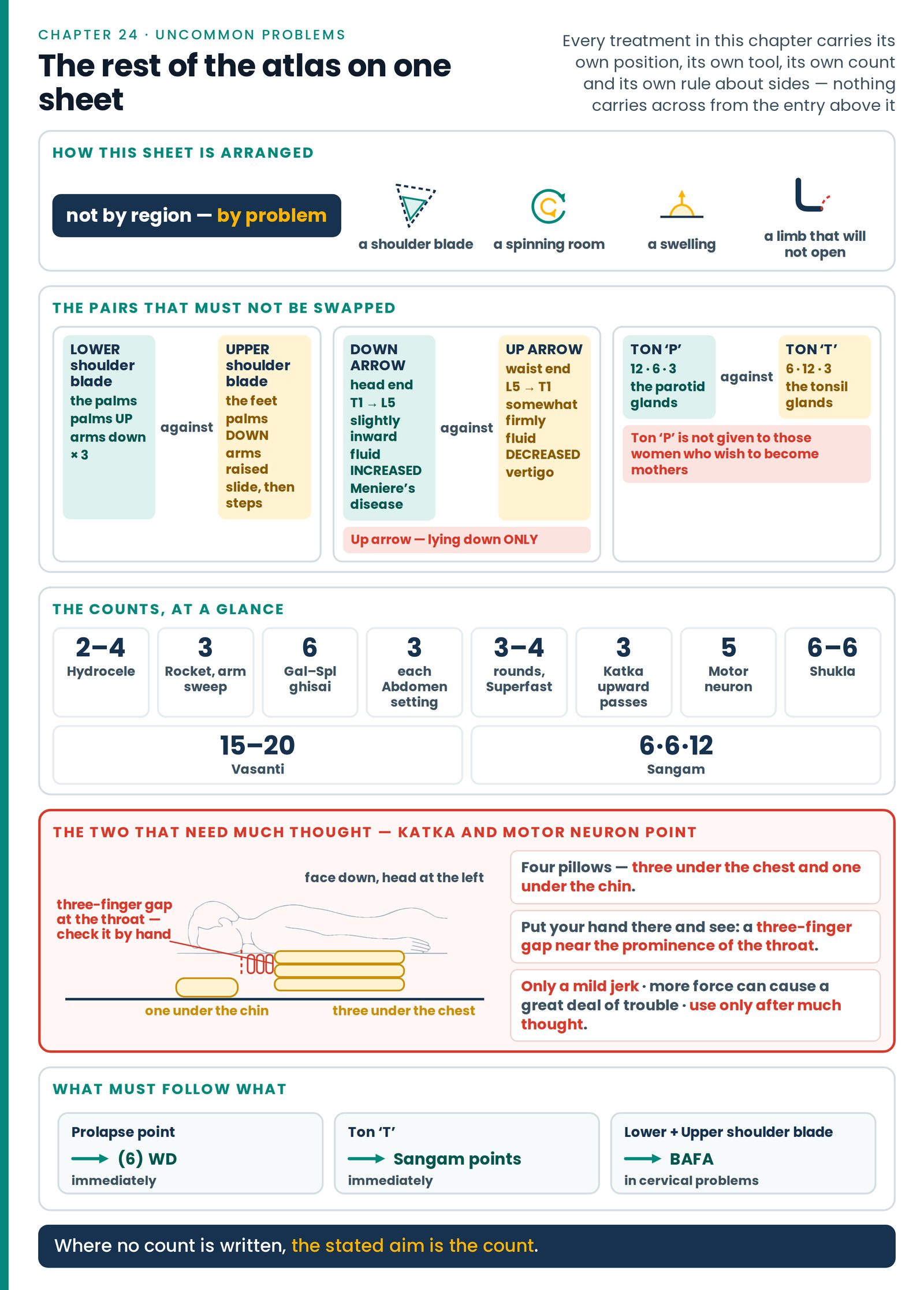
The rest of the atlas on one sheet. The article as one poster in five bands — how it is arranged, the three pairs that must not be swapped, every count at a glance, the shared set-up of the two forceful points, and what must follow what.
ट्रीटमेंट ख़त्म होने के बाद
दोबारा जाँचिए, प्लस और माइनस लिखिए, और रोगी को सँभालकर उठाइए
एटलस यहाँ बंद हो जाता है, सिटिंग नहीं। आख़िरी दस मिनट में जो होता है, वही तय करता है कि रोगी दोबारा आएगा या नहीं, अगले हफ़्ते आप बता पाएँगे या नहीं कि किस चीज़ ने काम किया — और कभी-कभी यह भी कि कोई व्यक्ति घर सही-सलामत पहुँचेगा या नहीं।
मुख्य शिक्षा
हर दर्द वाले पॉइंट को दोबारा जाँचिए, और उसे लिख लीजिए
ट्रीटमेंट के बाद हर दर्द वाले पॉइंट पर दर्द या अकड़न दोबारा जाँचिए, और उसे कार्ड पर सही जगह लिख लीजिए।
अगर ट्रीटमेंट से पहले Pan पर उसे बहुत तेज़ दर्द था, तो Pan⁺⁺⁺⁺ लिखिए। ट्रीटमेंट के बाद दोबारा जाँचिए। अगर दर्द पहले से कुछ कम हो गया है, तो चार प्लस जहाँ लिखा था, उसके नीचे दो प्लस लिखिए — Pan⁺⁺। अगर दर्द काफ़ी कम हुआ, पर थोड़ा बाक़ी रह गया, तो Pan⁺ लिखिए। और अगर दर्द पूरी तरह चला गया, तो जहाँ पहले Pan⁺⁺⁺⁺ लिखा था, उसके नीचे एक अकेला माइनस लिखिए — Pan ₋।
कार्ड पर क्या लिखा है
उसका मतलब क्या है
Pan⁺⁺⁺⁺
पॉइंट पर बहुत तेज़ दर्द — और यह ट्रीटमेंट से पहले लिखा जाता है
Pan⁺⁺
दर्द पहले से कुछ कम हो गया है — और यह पहली लिखाई के नीचे लिखा जाता है
Pan⁺
दर्द काफ़ी कम हुआ, पर थोड़ा बाक़ी रह गया
Pan ₋
दर्द पूरी तरह चला गया — यानी एक अकेला माइनस
दर्द जाँचने के साथ-साथ रोगी को दिखाइए या बताइए भी कि किन-किन जगहों पर, और कितना, दर्द कम हुआ है। इस निर्देश के पीछे गुरुजी दो वजहें बताते हैं, और दूसरी वजह को विद्यार्थी अक्सर कम आँकते हैं।
"इस तरह उन्हें दिखाकर या बताकर कि दर्द कम हो रहा है, इस थेरेपी पर उनका विश्वास बहुत बढ़ जाता है। उन्हें लगता है कि यह तो जादू है!
इसके अलावा इसका एक और बड़ा काम है — कभी-कभी रोगी दो या चार दिन ट्रीटमेंट लेकर फिर कई दिन नहीं आते। जब उन्हें दोबारा तकलीफ़ होती है, तब आकर कहते हैं कि ट्रीटमेंट से कोई फ़ायदा नहीं हुआ, क्योंकि उनका दर्द वैसे का वैसा लौट आया। इस थेरेपी में दर्द वाले पॉइंटों का दर्द निकालना या ख़त्म करना ही ट्रीटमेंट का मुख्य पहलू है। ऐसे में पिछले दिन का उनका कार्ड देखकर — ट्रीटमेंट से पहले और ट्रीटमेंट के बाद किस पॉइंट पर + है और किस पर – — हमें पता चल जाएगा कि रोगी को उस दिन की ट्रीटमेंट से सचमुच फ़ायदा हुआ था या नहीं। फिर हम तय कर सकते हैं कि पुरानी ट्रीटमेंट दोबारा देनी है या कोई दूसरी। यहाँ ध्यान देने की बात यह है कि जब तक कोई ट्रीटमेंट दर्द वाले पॉइंटों का दर्द कम कर रही है, तब तक उसे बदलकर दूसरी देने की ज़रूरत नहीं है।"
यह आख़िरी वाक्य फ़ैसला करने का एक नियम है, और इसे कंठस्थ कर लेने लायक़ है। योजना आगे चलेगी या नहीं, यह कार्ड तय करता है — रोगी की यह याद नहीं कि पिछले महीने कैसा लग रहा था।
उठना, और घर जाना।ट्रीटमेंट ख़त्म होने के बाद रोगी से कहिए कि करवट लेकर आराम से उठे और अपना सामान समेट ले।अगर दर्द का रोगी है, तो उससे कहिए कि थोड़ा चलकर आए, और फिर पूछिए कि ट्रीटमेंट कैसी लगी — कहेगा वह यही कि अच्छा लगा। फिर उससे कहिए कि आधे घंटे बाद वह खाना खा सकता है।और उसे यह भरोसा दिलाइए कि अगर वह नियम से ट्रीटमेंट लेता रहेगा और परहेज़ का ध्यान रखेगा, तो वाक़ई बहुत अच्छा महसूस करेगा।
अगर रोगी को चक्कर आएँ।ट्रीटमेंट के दौरान या उठने के बाद रोगी को थोड़े चक्कर जैसे लगें, तो घबराइए मत। इसका मतलब है कि ट्रीटमेंट से पाचन का काम इतना सुधर गया है कि पैंक्रियाज़ (pancreas) से इंसुलिन निकल आया है, और उसी वजह से ख़ून में शक्कर की मात्रा कम हो गई है। यह पल भर की बात है।उन्हें चेयर पर बिठाइए, और सहारा देते हुए उनके पास खड़े रहिए, जब तक उनकी घबराहट न चली जाए। ज़रूरत हो तो आधे गिलास पानी में थोड़ा गुड़ घोलकर उन्हें पिला दीजिए, और कहिए कि कुछ देर आराम कर लें, और उसके बाद ही घर के लिए निकलें।
अगर सिर भारी लगे।कुछ लोगों को, माथे में ख़ून का बहाव बढ़ जाने की वजह से, थोड़ी देर सिर भारी लग सकता है।ऐसा हो तो रोगी से कहिए कि घबराएँ नहीं। उन्हें चेयर पर बिठाइए, अपनी हथेली को कटोरी की तरह उनकी गर्दन के पीछे रखिए, मांसपेशियों और नसों को क़रीब एक सेकंड के लिए पीछे की तरफ़ खींचिए और धीरे से छोड़िए — सिर का भारीपन चला जाएगा।
टेलीफ़ोन।यह सब कर चुकने के बाद ही आप या वे मोबाइल पर किसी से बात कर सकते हैं — इससे पहले नहीं। अगर आप ख़ुद नियमों का पालन करेंगे, तो रोगी भी इस नियम का पालन करेगा, और उससे आपके प्रति और थेरेपी के प्रति आदर का भाव बढ़ेगा।
अगले रोगी से पहले।नीचे बिछा मैट साफ़ करिए और पिलो दोबारा ठीक से बिछाइए, ताकि उसमें कोई धूल, गंदगी या बेकार की सिलवट न रह जाए।
निर्देश
वह कहता क्या है
उठना
करवट लेकर आराम से उठना; और अपना सामान समेट लेना
दर्द का रोगी
थोड़ा चलकर आना, और उसके बाद पूछिए कि ट्रीटमेंट कैसी लगी
खाना
आधे घंटे बाद
जो भरोसा दिलाना है
नियम से ट्रीटमेंट, और परहेज़ का ध्यान — तो आप वाक़ई बहुत अच्छा महसूस करेंगे
चक्कर आएँ तो
घबराइए मत। उन्हें चेयर पर बिठाइए, और सहारा देते हुए उनके पास खड़े रहिए जब तक घबराहट न चली जाए; ज़रूरत हो तो आधे गिलास पानी में थोड़ा गुड़ घोलकर; और घर के लिए निकलने से पहले कुछ देर आराम
सिर भारी लगे तो
उन्हें चेयर पर बिठाइए, हथेली कटोरी की तरह गर्दन के पीछे, मांसपेशियाँ और नसें क़रीब एक सेकंड के लिए पीछे की तरफ़ खींची हुईं और फिर धीरे से छोड़ी हुईं
मोबाइल फ़ोन
यह सब हो चुकने के बाद ही — आपका भी, और उनका भी
अगले रोगी से पहले
मैट साफ़ करिए और पिलो दोबारा ठीक से बिछाइए — न धूल, न गंदगी, न कोई बेकार की सिलवट
एक ही पन्ने पर बाक़ी का एटलस। पूरा लेख एक पोस्टर की तरह, पाँच पट्टियों में — यह सब सजा किस तरतीब पर है, वे तीन जोड़ियाँ जिन्हें आपस में बदलना नहीं है, हर गिनती एक नज़र में, दोनों ज़ोर वाले पॉइंट का साझा इंतज़ाम, और किसके बाद क्या आना ही है।
Also beneficial for trouble in the throat, or soreness of the throat Do not give in diabetes, in rheumatoid arthritis and autoimmune disorder, and not in inflammation either ▲ Take care Ton 'T' is followed immediately b
Give Ton 'P' and Ton 'T', whose three rubs are identical and whose counts are not, the Sangam points that follow one of them, the Ankle point, and Feather touch.
Vasanti, Feather touch, Ton 'P' and Ton 'T', Sangam points and Ankle point — the tail of the atlas, with the four numbers that are the whole difference between the two Ton treatments and the counts of the three confluenc
Ton 'T': stimulating the tonsil glands in the neck The restriction Ton 'P' treatment is not given to those women who wish to become mothers ▲ Take care What must follow Immediately after the Ton 'T' treatment, Sangam po
Give the two paired instructions that must never be separated: P point followed immediately by (6) WD, and Ton 'T' followed immediately by Sangam points.
Give this And with it, always The reason as given Th + Ch Armpits, without fail Printed as a standing instruction above the entry Gas Only in constipation, piles or fistula Gas 'I' — and (2) S4, S5 too if the constipatio
Code Full name / Hindi Where it is taught in this wiki Adr Adrenal Face Down Swt Sweat Face Down Back Arrow Back Arrow, or Blood supply to lungs Face Down H arrow — Face Down On the spine — Face Down Beside the spine — Face Down Round arrow —
Four pairs are never separated: Gas Only → Gas 'I' (and (2) S4, S5 if the constipation is severe) in constipation, piles, fistula and every UDF treatment; P point → (6) WD; Ton 'T' → Sangam points; (8) Ch.
Ready to begin?
Send COURSE for course details, or your name, age and health issue for a consultation.