- How it is givenकैसे दिया जाता है
- What it is used forकिसलिए दिया जाता है
Watchवीडियो देखिए


Fromस्रोत Knee, Leg, Footघुटना, टाँग और पैर — JJ Groin, JJ Back, BOF, Big Toe Gas
PRADEEP — the pillow, the jerk, the walks and the stand
Five stages in order, and the first of them is the placing of a pillow
Five stages, given in order — and the first of them is the placing of a pillow, which tells you how much of this treatment is decided before a foot touches anybody.
The variant some therapists use in place of stages 3 and 4 {{x3}}
In place of numbers 3 and 4 above, some therapists do it this way → placing the soles on both sides of the knee, they move the two feet alternately in opposite directions — that is, the left foot travels from the knee towards the hip while at the same time the right foot travels from below the knee towards the heel.
Three rounds like that. After that, do number 5 above.
This is not a shortcut and not a correction. It is a second way of covering the same territory, in which the two halves happen together rather than one after the other. Both are given; neither is marked as preferred. What the variant does not replace is stage 5, which follows in either version. Learn both, give one, and write on the card which one you gave.
| Patient's position | Lying; the knee being treated kept bent inward; the pillow at an angle — corner slightly outside the knee, long side under the thigh, part of its width under the lower leg. Left knee first, then the right Supine Left Right |
|---|---|
| The therapist | Between the patient's legs, looking at the knee, body weight taken on the hands on the chairs |
| The five stages, in short | 1 the pillow · 2 the stance · 3 heels either side of the knee, one downward jerk, then from near the upper border walk knee → hip pressing inward, 3 rounds · 4 from just below the knee walk down to the heel pressing downward and inward, 3 rounds · 5 the soft middle of the sole exactly in the middle of the knee bone, whole weight, standing up straight. Then the whole process on the other knee × 3 |
| Variant | In place of 3 and 4 — the soles on both sides of the knee, the two feet moved alternately in opposite directions: left foot knee → hip while the right foot travels from below the knee → heel. Three rounds; then number 5 |
| What it is for | Part of the knee sequence, following Giriraj and calf muscle ghisai |
Stage 1 is a treatment, not bedding. The pillow goes under the knee at an angle, its corner slightly outside the knee, its long side under the thigh, part of its width under the lower leg — three separate placements in one sentence. What it achieves is that thigh and lower leg are both carried and the knee rests in a little bend with nothing hanging, which is the position of greatest room inside the joint and least pressure across it. A knee held dead straight passes every downward force through the joint line. Set the pillow wrongly and you have changed what stage 5 lands on. And "kept bent inward" turns the limb so the inner side of the knee comes up toward you — the aspect the figure shows and the aspect your feet will meet.
"Stand between their legs, looking at the knee" — not beside the patient, as almost everywhere else. The walks run away from you and back towards you along the limb, and only from between the legs can one therapist reach them all.
The jerk comes first and is given once. Both feet on either side of the knee — not on it — and pressure downward through the heels with a jerk. One impulse, then the walking begins. A jerk is the one load a therapist cannot take back once begun, which is why it is given at the start, on a knee already softened by four treatments.
The two walks are mirror images with different pressure directions: upward from near the upper border of the knee, pressing the muscles inward, small close steps, three rounds; downward from just below the knee to the heel, pressing downward and inward, three rounds. Inward going up; downward and inward coming down. Both start beside the joint, not on it. The rule The Low Back states three separate times — by no mistake should the foot fall on the knee joint — governs every travelling step here. (Figure 23.3)
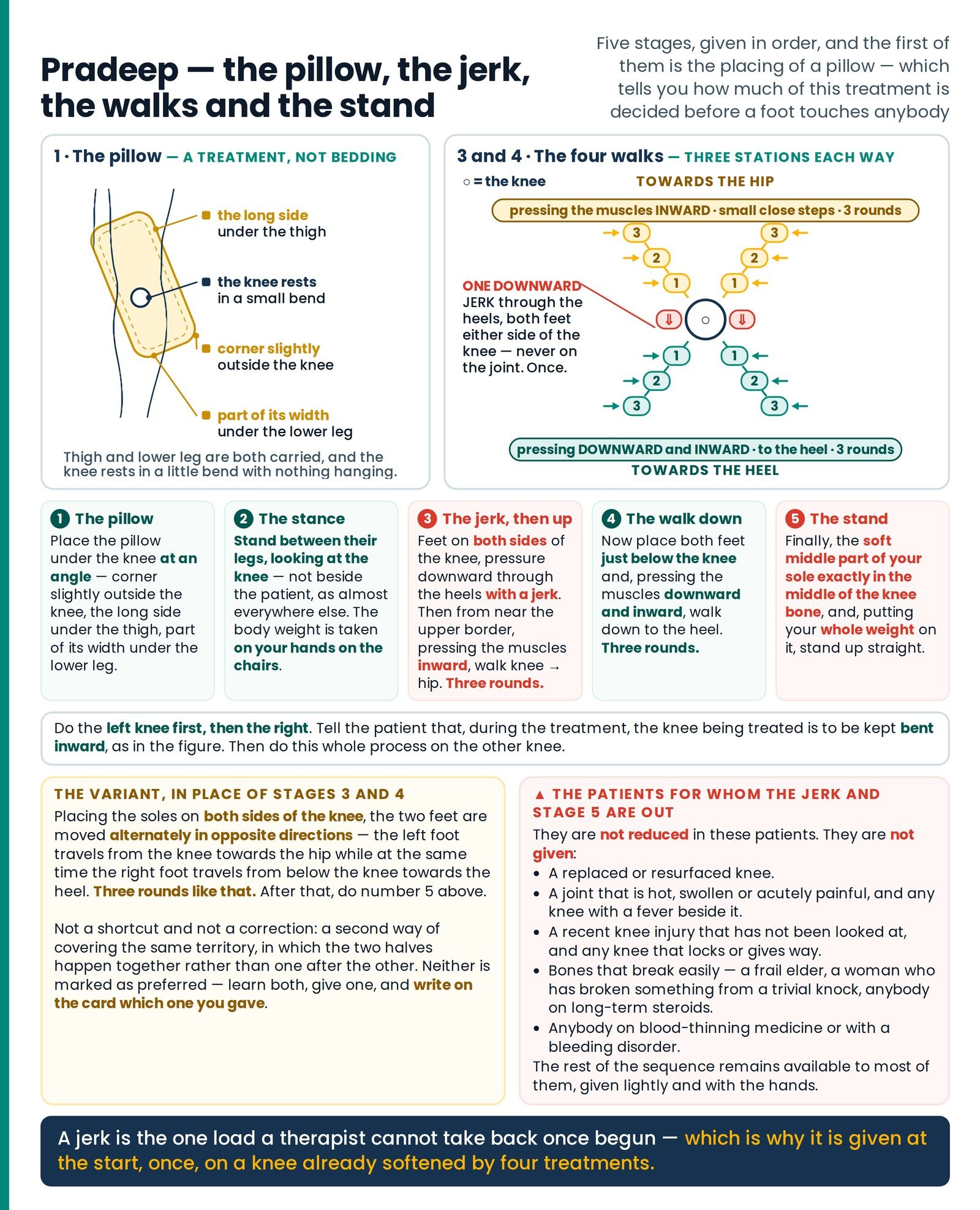
And stage 5 is not a step of the walk. It is a separate, named, final action, described in full. The soft middle part of the sole — the softest tool a therapist has — placed exactly in the middle of the knee bone, and then the whole weight put on it, standing up straight. It is placed, not walked onto; it is the mid-sole, not the heel; it lands on a knee bent inward on an angled pillow with thigh and lower leg both carried; and it comes after everything above. Every one of those clauses is part of the instruction. Give stage 5 as it is written, with the pillow as it is written, and give it last.
PRADEEP — पिलो, झटका, चलना और खड़ा होना
क्रम से पाँच चरण, और उनमें पहला चरण है पिलो का रखा जाना
पाँच चरण, क्रम से दिए जाते हैं — और उनमें पहला चरण है पिलो का रखा जाना, जिससे पता चल जाता है कि इस ट्रीटमेंट का कितना हिस्सा किसी पैर के छूने से पहले ही तय हो चुका होता है।
वह बदला हुआ रूप, जिसे कुछ थेरेपिस्ट चरण 3 और 4 की जगह इस्तेमाल करते हैं {{x3}}
ऊपर के नंबर 3 और 4 की जगह कुछ थेरेपिस्ट इसे इस तरह करते हैं → तलवे घुटने के दोनों तरफ़ रखकर वे दोनों पैरों को बारी-बारी उलटी दिशाओं में चलाते हैं — यानी बायाँ पैर घुटने से नितंब की तरफ़ जाता है और ठीक उसी वक़्त दायाँ पैर घुटने के नीचे से एड़ी की तरफ़ जाता है।
इसी तरह तीन चक्कर। उसके बाद ऊपर का नंबर 5 कीजिए।
यह न कोई छोटा रास्ता है, न कोई सुधार। यह उसी इलाक़े को ढकने का दूसरा तरीक़ा है, जिसमें दोनों आधे हिस्से एक के बाद एक नहीं, एक साथ होते हैं। दोनों लिखे हुए हैं; किसी एक को बेहतर नहीं कहा गया। यह बदला हुआ रूप जिसकी जगह नहीं लेता, वह है चरण 5 — वह दोनों ही रूपों में उसके बाद आता है। दोनों सीखिए, दीजिए एक, और कार्ड पर लिखिए कि आपने कौन-सा दिया।
| रोगी की स्थिति | लिटाया हुआ; जिस घुटने पर काम हो रहा है, वह भीतर की तरफ़ मुड़ा हुआ; पिलो तिरछा — कोना घुटने से ज़रा बाहर, लंबी तरफ़ जाँघ के नीचे, चौड़ाई का कुछ हिस्सा टाँग के निचले हिस्से के नीचे। पहले बायाँ घुटना, फिर दायाँ पीठ के बल बायाँ दायाँ |
|---|---|
| थेरेपिस्ट | रोगी की दोनों टाँगों के बीच, नज़र घुटने पर, शरीर का वज़न चेयरों पर रखे हाथों पर |
| पाँचों चरण, संक्षेप में | 1 पिलो · 2 खड़े होने का ढंग · 3 एड़ियाँ घुटने के दोनों तरफ़, एक बार नीचे की तरफ़ झटका, फिर ऊपरी किनारे के पास से घुटना → नितंब, भीतर की तरफ़ प्रेशर देते हुए चलना, 3 चक्कर · 4 घुटने से ज़रा नीचे से नीचे एड़ी तक, नीचे और भीतर की तरफ़ प्रेशर देते हुए चलना, 3 चक्कर · 5 तलवे का नरम बीच वाला हिस्सा ठीक घुटने की हड्डी के बीचोंबीच, पूरा वज़न, और सीधे खड़े हो जाना। फिर यही पूरा तरीक़ा दूसरे घुटने पर × 3 |
| बदला हुआ रूप | 3 और 4 की जगह — तलवे घुटने के दोनों तरफ़, दोनों पैर बारी-बारी उलटी दिशाओं में चलते हुए: बायाँ पैर घुटना → नितंब और उसी वक़्त दायाँ पैर घुटने के नीचे से → एड़ी। तीन चक्कर; उसके बाद नंबर 5 |
| यह किसलिए है | घुटने के क्रम का एक हिस्सा, Giriraj और पिंडली की मांसपेशी की घिसाई के बाद |
चरण 1 अपने आप में एक ट्रीटमेंट है, बिस्तर लगाना नहीं। पिलो घुटने के नीचे तिरछा जाता है, उसका कोना घुटने से ज़रा बाहर, उसकी लंबी तरफ़ जाँघ के नीचे, चौड़ाई का कुछ हिस्सा टाँग के निचले हिस्से के नीचे — एक ही वाक्य में तीन अलग-अलग जगहें। इससे होता यह है कि जाँघ और टाँग का निचला हिस्सा दोनों सँभल जाते हैं, और घुटना ज़रा-सा मुड़ा हुआ टिका रहता है, कुछ भी लटका हुआ नहीं रहता — और जोड़ के भीतर सबसे ज़्यादा जगह तथा जोड़ के आर-पार सबसे कम प्रेशर इसी स्थिति में होता है। जो घुटना बिलकुल सीधा तना रहता है, वह नीचे की तरफ़ पड़ने वाला हर ज़ोर जोड़ की लकीर से होकर गुज़ार देता है। पिलो ग़लत रख दिया, तो आपने यह बदल दिया कि चरण 5 किस चीज़ पर उतरेगा। और "भीतर की तरफ़ मोड़कर रखना" टाँग को इस तरह घुमा देता है कि घुटने की भीतरी तरफ़ ऊपर आपकी तरफ़ आ जाए — चित्र में यही रुख़ दिखाया गया है, और आपके पैर इसी रुख़ से मिलेंगे।
"रोगी की दोनों टाँगों के बीच खड़े होइए, नज़र घुटने पर" — रोगी के बग़ल में नहीं, जैसा क़रीब-क़रीब हर दूसरी जगह होता है। चलना टाँग के साथ-साथ आपसे दूर जाता है और फिर आपकी तरफ़ लौटता है, और दोनों टाँगों के बीच खड़े होकर ही एक थेरेपिस्ट इन सब तक पहुँच सकता है।
झटका सबसे पहले आता है और सिर्फ़ एक बार दिया जाता है। दोनों पैर घुटने के दोनों तरफ़ — उस पर नहीं — और एड़ियों से झटके के साथ नीचे की तरफ़ प्रेशर। एक ही ठोकर, उसके बाद चलना शुरू। झटका ही वह एक बोझ है, जिसे शुरू कर देने के बाद थेरेपिस्ट वापस नहीं ले सकता — इसीलिए वह शुरू में दिया जाता है, उस घुटने पर जो चार ट्रीटमेंट से पहले ही नरम हो चुका है।
दोनों चलने आईने की तरह एक-दूसरे के उलटे हैं, पर प्रेशर की दिशा अलग-अलग: ऊपर की तरफ़ घुटने के ऊपरी किनारे के पास से, मांसपेशियों पर भीतर की तरफ़ प्रेशर देते हुए, छोटे-छोटे पास-पास क़दम, तीन चक्कर; नीचे की तरफ़ घुटने से ज़रा नीचे से एड़ी तक, नीचे और भीतर की तरफ़ प्रेशर देते हुए, तीन चक्कर। ऊपर जाते वक़्त भीतर की तरफ़; नीचे आते वक़्त नीचे और भीतर की तरफ़। दोनों जोड़ के बग़ल से शुरू होते हैं, जोड़ पर से नहीं। कमर और साइटिका — L3-4-5, JJ, Sciatica Point और Sciatica Setting जिस नियम को तीन-तीन बार अलग-अलग जगह लिखता है — भूलकर भी पैर घुटने के जोड़ पर नहीं पड़ना चाहिए — वही यहाँ के हर चलते क़दम पर लागू है। (चित्र 23.3)
और चरण 5 चलने का कोई क़दम नहीं है। यह एक अलग, नाम लेकर लिखी हुई, आख़िरी हरकत है, जिसे पूरा-पूरा बताया गया है। तलवे का नरम बीच वाला हिस्सा — थेरेपिस्ट के पास का सबसे नरम औज़ार — ठीक घुटने की हड्डी के बीचोंबीच रखा जाता है, और फिर पूरा वज़न उस पर डालकर सीधे खड़ा हुआ जाता है। यह रखा जाता है, चलकर उस पर चढ़ा नहीं जाता; यह तलवे का बीच है, एड़ी नहीं; यह उस घुटने पर उतरता है जो तिरछे रखे पिलो पर भीतर की तरफ़ मुड़ा हुआ है, और जिसकी जाँघ तथा निचला हिस्सा दोनों सँभले हुए हैं; और यह ऊपर की हर चीज़ के बाद आता है। इनमें से हर एक बात निर्देश का हिस्सा है। चरण 5 वैसे ही दीजिए जैसा लिखा है, पिलो वैसे ही रखिए जैसा लिखा है, और इसे सबसे आख़िर में दीजिए।
इस विकी में यह भी देखिए
Also explained inयहाँ भी समझाया गया है
- The knee sequence, said aloudघुटने का पूरा क्रम, बोलकर दोहराने लायक़ Knee, Leg, Footघुटना, टाँग और पैर — JJ Groin, JJ Back, BOF, Big Toe Gas
ine separable treatments, their counts and their sides, in one order THE METHOD, STEP BY STEP The order, with its counts — to be learnt by heart · Treatment · Position · Tool · Count · Which side 0 · The chemical points
- Questions students ask Knee, Leg, Footघुटना, टाँग और पैर — JJ Groin, JJ Back, BOF, Big Toe Gas
Why does Pradeep start with a jerk when everything else here is slow? Because it is a different kind of load doing a different job, given once, at the beginning, on a knee already softened by four treatments.
- Why the chemical points come firstकेमिकल पॉइंट पहले क्यों आते हैं Knee, Leg, Footघुटना, टाँग और पैर — JJ Groin, JJ Back, BOF, Big Toe Gas
Giriraj carries the thigh tissue back upward, the direction it was pulled down from; the calf ghisai does the same below; Pradeep works the region from four sides.
- Introduction Knee, Leg, Footघुटना, टाँग और पैर — JJ Groin, JJ Back, BOF, Big Toe Gas
Give Pradeep complete — the angled pillow, the stance, the jerk, three rounds up, three rounds down, the final full-weight stand — and give the variant some therapists use in place of stages 3 and 4.
- GIRIRAJ — carrying the thigh back upwardGIRIRAJ — जाँघ को वापस ऊपर की तरफ़ ले जाना Knee, Leg, Footघुटना, टाँग और पैर — JJ Groin, JJ Back, BOF, Big Toe Gas
ingers together, clockwise, knee → groin, along three or four lines Several treatments in this atlas carry a person's name rather than a place — Giriraj and Pradeep here, and elsewhere Loveleen, Raman, Shivaji, Mauneesh.
- BOF — Bottom of Feet, and its four sidesBOF — Bottom of Feet, और उसकी चारों तरफ़ Knee, Leg, Footघुटना, टाँग और पैर — JJ Groin, JJ Back, BOF, Big Toe Gas
And "begin with the right leg and finish with the left" is the opposite of the order used elsewhere in this article — Knee Cap Free begins with the more troublesome knee, Pradeep with the left.
- The knee and the lower limbघुटना और टाँग Each Point in Useहर पॉइंट: किस बीमारी में देना है और किसमें रोकना है
Pradip trt. Given for knee pain.
- Every symbol, and how to say it in wordsहर चिह्न, और उसे शब्दों में कैसे बोलेंगे The Shorthandकोड और चिह्न — फ़ॉर्मूला की लाइन पढ़ना
The second plate of the written symbols, redrawn as clean vector glyphs beside their point names as printed: from Hydrocele point and Knee Cap Free to Motor Neuron Point and T 8, including the numbered Pradeep chevrons a
- The three tiers — point, formula, treatmentतीन स्तर — पॉइंट, फ़ॉर्मूला, ट्रीटमेंट The Shorthandकोड और चिह्न — फ़ॉर्मूला की लाइन पढ़ना
The same custom is at work when a formula here is called Loveleen, Raman, Giriraj, Pradeep, Shukla or Vasanti — each the given name of a person in whose case the manoeuvre was first found.
- The master list — every treatment point, by the position the patient is placed inमास्टर लिस्ट — हर ट्रीटमेंट पॉइंट, उस पोज़ीशन के हिसाब से जिसमें रोगी को रखा जाता है The Shorthandकोड और चिह्न — फ़ॉर्मूला की लाइन पढ़ना
Code Full name / Hindi Where it is taught in this wiki Adr Adrenal Face Down Swt Sweat Face Down Back Arrow Back Arrow, or Blood supply to lungs Face Down H arrow — Face Down On the spine — Face Down Beside the spine — Face Down Round arrow —
- PROLAPSE POINT — also written P pointPROLAPSE POINT — इसे P point भी लिखा जाता है Uncommon Problemsलकवा, MND, वर्टिगो, ऑस्टियोपोरोसिस — कम मिलने वाली तकलीफ़ों के पॉइंट
Left thigh first, then the right thigh — written out, like Pradeep's left knee first in Knee, Leg, Foot, and not to be swapped because the right thigh happens to be nearer you.
- T8, Rocket, Katka — and how these names were madeT8, Rocket, Katka — और ये नाम बने कैसे Uncommon Problemsलकवा, MND, वर्टिगो, ऑस्टियोपोरोसिस — कम मिलने वाली तकलीफ़ों के पॉइंट
Shukla, Vasanti, and in the last article Pradeep and Giriraj.
- The notation, completeलिखावट, पूरी की पूरी How a Formula Is Builtपॉइंट से फ़ॉर्मूला कैसे बनता है — क्रम के पाँच नियम
Write the glyph and the code where the card will be read by somebody else Proper names Ajay Normal · Raman · Maunish · Giriraj · Pradeep · Vasanti · Shukla as written The given name of a person in whose case the manoeuvr
- Woundsघाव When the Hand Must Stopडायबिटीज़, दिल, कैंसर, बवासीर — कहाँ हाथ रोकना है और कब डॉक्टर के पास भेजना है
They must be given the full 1,25 DCC formula The Front of the Body II · Correcting the Two Kingdoms Osteoporosis · frail bone · long-term steroids · a bone broken from a trivial knock Every jerk in the atlas — Katka, Motor neuron point, P point, the Pradeep jerk