Watch


The three levels
The stomach, the accessory organs and small intestine, and immunity
Bad digestion is not one thing, and the work is not aimed at one place.
The three levels
The problem of UDF is solved in Neurotherapy from three levels, for which there are several kinds of UDF formula. They work in the following manner —
Level one — the stomach. They increase the blood circulation in the stomach, from which the discharge of hydrochloric acid, pepsin and the other secretions of the stomach increases.
Level two — the accessory organs and the small intestine. Seeing the patient's condition, according to the need they increase the blood circulation in the various parts of the gall bladder, liver, pancreas and small intestine, so that the digestion, absorption and metabolism of proteins and nutrients happens properly.
Level three — immunity. They increase immunity — the disease-resisting power — so that there is protection from germs.
By all these means the production of the body's hormones and chemicals improves, and the repair of cells and tissues and the other maintenance and protective functions receive promotion.
Read them the other way round and they describe how digestion fails — the acid going first, the digestion behind it starving for want of what the acid was to start, and the germs the acid used to kill walking through the door it was holding. (Figure 9.3)
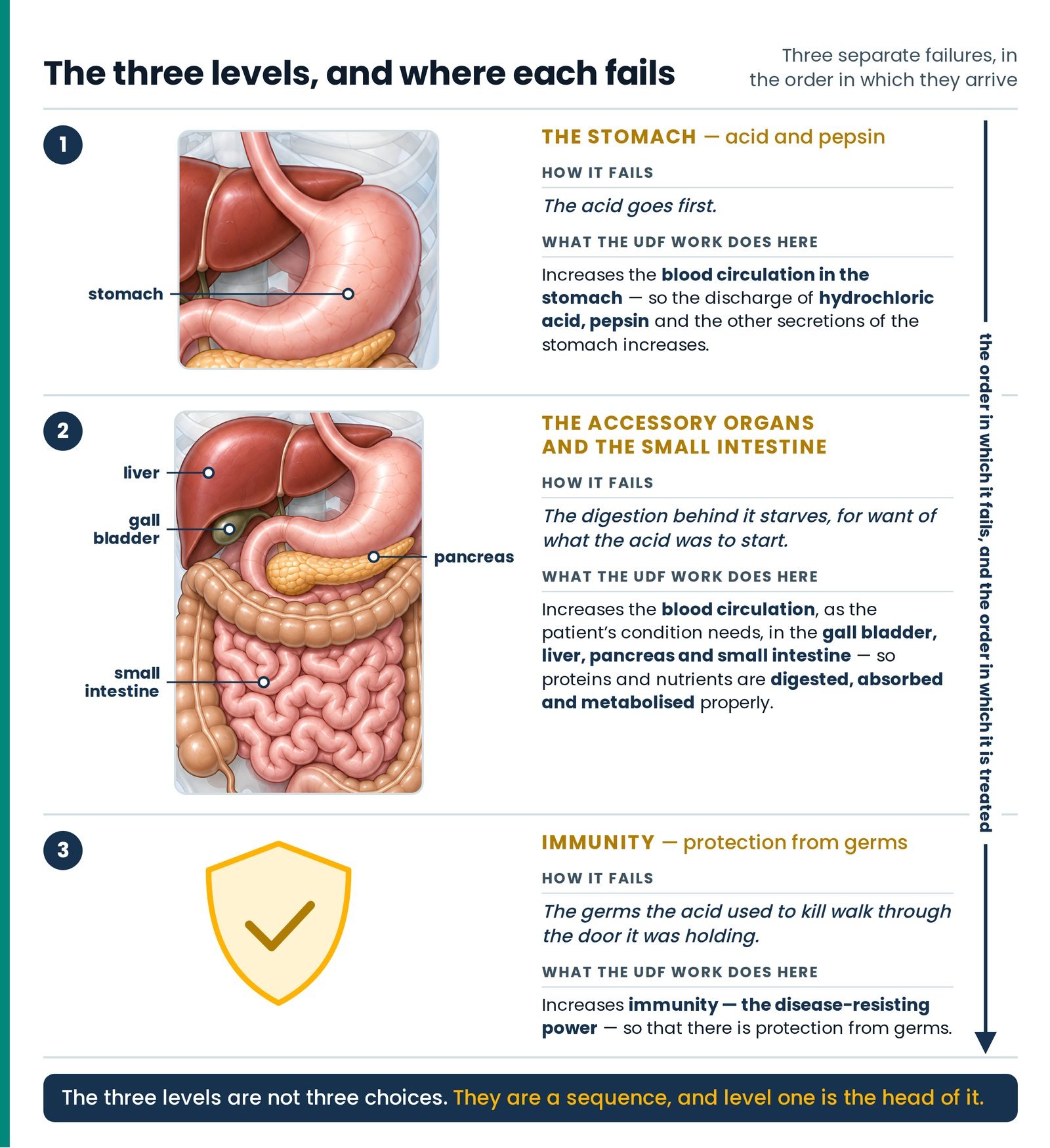
Table 2 — The three levels, and how each is recognised
| Level | What has failed | How you recognise it at the mat |
|---|---|---|
| One — the stomach | Blood supply to the stomach is reduced, so hydrochloric acid and pepsin are not made in proper quantity or proper concentration | Pain at Gas · food coming out in its own shape or colour · little hunger felt · in a baby, milk vomited as milk, not as curd · repeated stomach infections, nothing being killed on the way in |
| Two — the accessory organs and the small bowel | Blood supply short to the gall bladder, liver, pancreas and small intestine, so digestion, absorption and metabolism are all poor | Pain at Pan, Gal, Liv · pain at the B₁₂ and FA points, or both · lines or scratches on the tongue · fats not tolerated · deficiency pictures that persist through every tablet |
| Three — immunity | The disease-resisting power is low, so germs that should have been killed at the stomach are not dealt with anywhere | Infection or inflammation in several places at once · the patient who catches everything · long-standing inflammation with no source anyone can find |
One consequence of level three explains why immunity work sits inside a digestive treatment: when someone gets UDF, there will be infection in a great many organs of his body — and the treatment given for it has been found to put right infection and inflammation wherever in the whole body it may be.
What protein digestion requires
Primary factors — signals from the tenth cranial nerve, the vagus; proper secretion of hydrochloric acid and pepsin from the peptic glands in the stomach; proper secretion and action of histamine, pepsin and the hormone gastrin.
Secondary factors — the presence of acetylcholine as neurotransmitter; proper working of the duodenum and the small intestine; proper functioning of the exocrine pancreas.
And the rule governing the first group: hydrochloric acid will be produced in the stomach only in the presence of ALL THREE — acetylcholine, histamine and gastrin.
From which the design of the treatments follows: the first and most important requirement is to stimulate the production of hydrochloric acid in the stomach. Every formula built for UDF, whoever builds it, must include some treatment that does this.
What poor blood supply to the abdomen costs
UDF is always associated with pain at Gas, signifying poor blood supply to the abdomen — and so poor or insufficient blood flow to one or more areas of the abdominal aorta and the mesenteric arteries. This leads to:
a. Improper digestion and metabolism of proteins — which means the amino acids necessary to build and repair tissues are not available.
b. Non-availability of raw materials for the various glands, and so deficiencies of their chemicals. If there is a deficiency of chemicals to the brain, it culminates in various types of neuro-muscular disorder. If there is a deficiency in T₃–T₄ or in PTH production, it causes disorders of the thyroid gland or of calcium metabolism respectively.
The different versions of the UDF treatment improve the digestion, absorption and metabolism of proteins and nutrients by increasing blood supply to specific parts of the abdomen. Hence there is proper production of hormones, and the maintenance of tissue with the building activities that go with it gets a great boost.
Finding it in the patient
Gas, Liv and Rt.Ov, the B₁₂ and FA points, and the midline band
The methods by which the condition of the internal organs is established
The pain points around the navel.
Pain at the B₁₂ and folic acid points.
The nature of the stools.
And in women, the menstrual history is an additional and a very valuable tool.
The information from all of these has to be correlated to arrive at a proper diagnosis.
Pain at the B₁₂ or folic acid points is one of the major tools of this diagnosis.
Generally such patients have pain or hardness in the region of Gas, Liv and Rt.Ov, in addition to pain in Liv°.
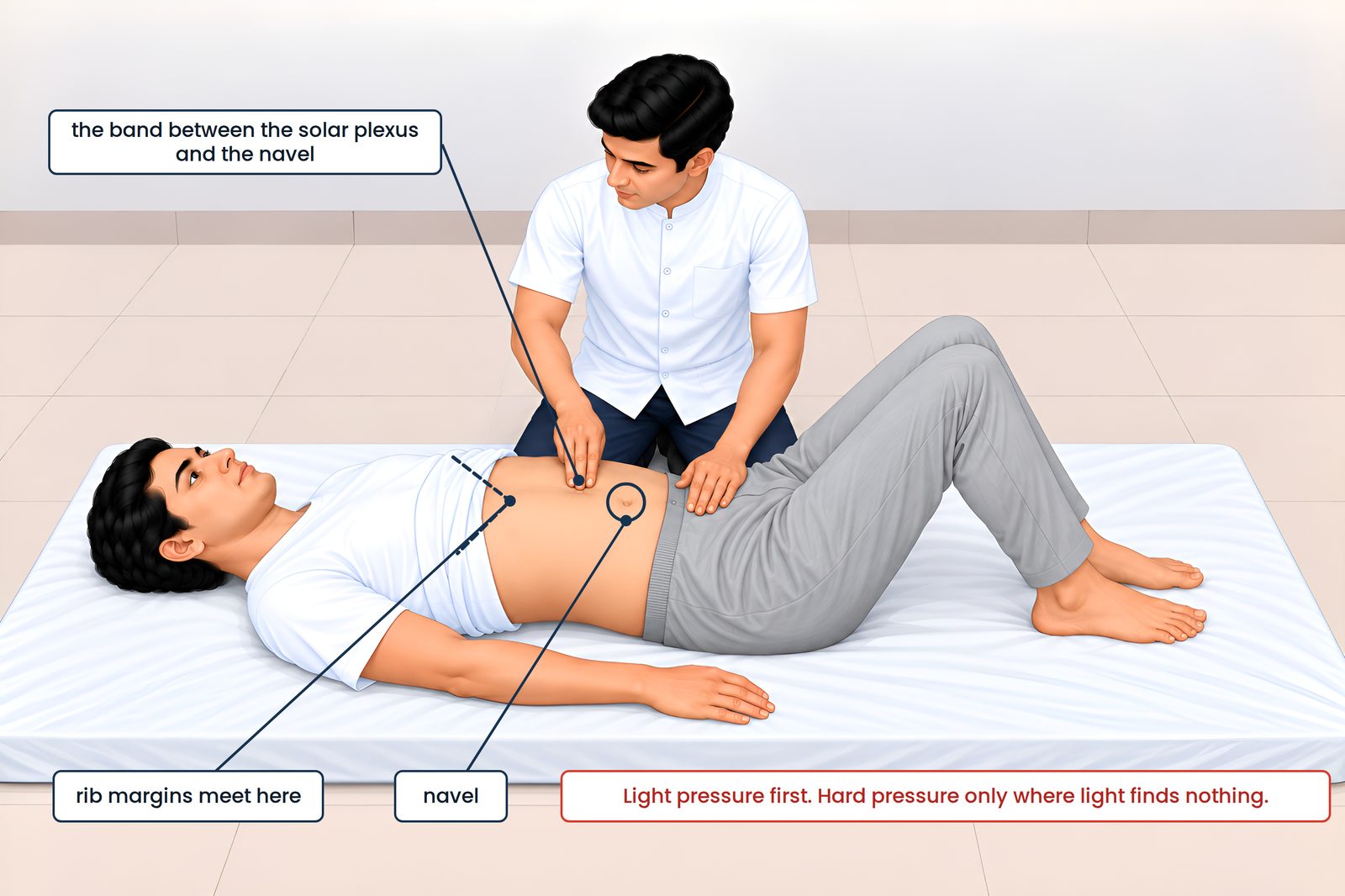
In some the pain is apparent even without palpation. In others it appears only when one presses hard in the region vertically between the navel and the solar plexus.
In addition, some feel pain at the points of either B₁₂ or folic acid or both, usually on palpation.
The pain points of the UDF patient
Women with pain at Liv° usually have scanty or delayed menses.
And then the sentence that makes the whole questionnaire necessary: it is a separate matter that they will never have peeped inside the latrine to see what the motion is like. But if you explain the importance of it and tell them to observe, the very next day they will come and say — yes, undigested food is seen in the motion.