- Formsरूप
- (6) ↖○↗
- How it is givenकैसे दिया जाता है
- What it is used forकिसलिए दिया जाता है
Watchवीडियो देखिए


Fromस्रोत Face Downपेट के बल — Adr, Swt, Back Arrow, H Arrow, Round Arrow, KU, बवासीर का ट्रायंगल
BACK ARROW — बेक एरो
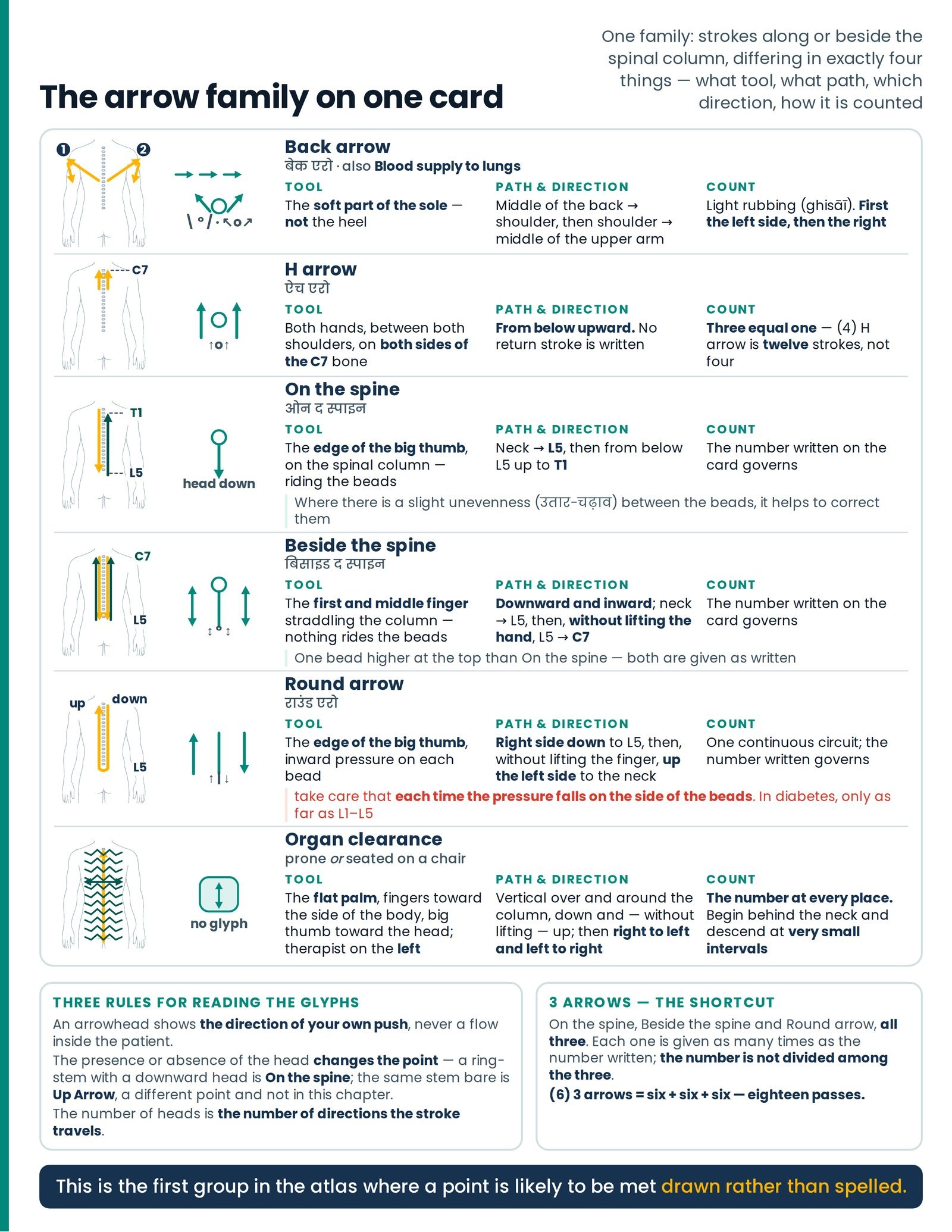
Its other name is Blood supply to lungs, because it increases blood circulation in the lungs. It is given in all breathing-related diseases.
With the soft part of the sole of the foot — from the middle of the back toward the shoulder, and from the shoulder to the middle part of the upper arm — do light rubbing (ghisāī). First the left side, then the right side.
Its symbol is → → → ↖o↗
| Patient's position | Prone, 1½ pillows under the chest Prone |
|---|---|
| Where the feet are placed | The soft part of the sole — not the heel — middle of the back → shoulder, then shoulder → middle of the upper arm |
| Duration and repetitions | Light rubbing (ghisāī); first the left side, then the right side Left Right |
| What it is for | Increasing blood circulation in the lungs; given in all breathing-related diseases |
Two words in that instruction are the safety of the point — soft part of the sole, never the heel, and light. The route is one continuous sweep in two halves, and the order is written: left side first, then right. (Figure 21.4)
What lies beneath. The big diamond of muscle across the upper back, the muscles binding the shoulder blade to the spine, the cap over the point of the shoulder — and under the inner edge of the shoulder blade, the ribs, with the top of the lung rising higher than most students expect. And the claim, once, since it recurs: pulmonary blood flow is set by the heart and the lungs' own vessels, not by a hand on a back. What a sweep can do is loosen a chest wall that has been working hard — worth having alongside a patient's inhaler, never instead of it.
BACK ARROW — बेक एरो
इसका दूसरा नाम Blood supply to lungs है — यानी फेफड़ों (lung) तक खून पहुँचाना — क्योंकि यह फेफड़ों में खून का दौरा बढ़ाता है। यह साँस से जुड़ी हर बीमारी में दिया जाता है।
पैर के तलवे के नरम हिस्से से — पीठ के बीच से कंधे की तरफ़, और कंधे से बाँह के बीच वाले हिस्से तक — हल्की घिसाई कीजिए। पहले बाईं तरफ़, फिर दाईं तरफ़।
इसका चिह्न है → → → ↖o↗
| रोगी की स्थिति | पेट के बल, छाती के नीचे 1½ पिलो पेट के बल |
|---|---|
| पैर कहाँ रखे जाते हैं | तलवे का नरम हिस्सा — एड़ी नहीं — पीठ का बीच → कंधा, फिर कंधा → बाँह का बीच वाला हिस्सा |
| कितनी देर और कितनी बार | हल्की घिसाई; पहले बाईं तरफ़, फिर दाईं तरफ़ बायाँ दायाँ |
| यह किसलिए है | फेफड़ों में खून का दौरा बढ़ाना; साँस से जुड़ी हर बीमारी में दिया जाता है |
उस निर्देश के दो ही शब्द इस पॉइंट की सुरक्षा हैं — तलवे का नरम हिस्सा, एड़ी कभी नहीं, और हल्की। रास्ता एक ही लगातार चलती घिसाई है, जो दो हिस्सों में बँटी है, और क्रम लिखा हुआ है: पहले बाईं तरफ़, फिर दाईं। (चित्र 21.4)
नीचे क्या पड़ा है। ऊपरी पीठ पर फैली मांसपेशी की बड़ी चौकोर चादर, कंधे की चपटी हड्डी (shoulder blade) को रीढ़ से बाँधे रखने वाली मांसपेशियाँ, और कंधे के सिरे पर चढ़ी हुई टोपी — और कंधे की उसी हड्डी के भीतरी किनारे के नीचे पसलियाँ, जिनके पीछे फेफड़े का ऊपरी सिरा ज़्यादातर विद्यार्थियों की सोच से कहीं ऊपर तक उठा रहता है। और वह दावा, एक बार साफ़-साफ़, क्योंकि वह बार-बार लौटता है: फेफड़ों में खून का बहाव दिल और ख़ुद फेफड़ों की अपनी नसें तय करती हैं, पीठ पर रखा कोई हाथ नहीं। यह घिसाई इतना कर सकती है कि लगातार मेहनत करती हुई छाती की दीवार ढीली पड़ जाए — रोगी के इनहेलर के साथ रखने लायक़ चीज़, उसकी जगह लेने वाली कभी नहीं।
Also explained inयहाँ भी समझाया गया है
- The Oxygen-Hormonal treatmentOxygen-Hormonal ट्रीटमेंट Water and Saltब्लड प्रेशर, किडनी, पथरी, निमोनिया — LSTF, Round Normal, Lactic Acid, Angiotensin
Its other name is Blood supply to lungs Prone Left Right I (1) H Arrow ↑o↑ Between both shoulders, on both sides of the C7 bone, rub from below upward.
- The master list — every treatment point, by the position the patient is placed inमास्टर लिस्ट — हर ट्रीटमेंट पॉइंट, उस पोज़ीशन के हिसाब से जिसमें रोगी को रखा जाता है The Shorthandकोड और चिह्न — फ़ॉर्मूला की लाइन पढ़ना
Code Full name / Hindi Where it is taught in this wiki Adr Adrenal Face Down Swt Sweat Face Down Back Arrow Back Arrow, or Blood supply to lungs Face Down H arrow — Face Down On the spine — Face Down Beside the spine — Face Down Round arrow —
- Every symbol, and how to say it in wordsहर चिह्न, और उसे शब्दों में कैसे बोलेंगे The Shorthandकोड और चिह्न — फ़ॉर्मूला की लाइन पढ़ना
(Figure 14.2) Table 10 — The written symbols and their names (first plate) Symbol (described) Code Full name A small circle flanked by inward-leaning strokes — \ ° / Back Arrow Back Arrow, or Blood supply to lungs Two
- Introduction Water and Saltब्लड प्रेशर, किडनी, पथरी, निमोनिया — LSTF, Round Normal, Lactic Acid, Angiotensin
Two spellings you will meet on a card in this article: ↑|↓ is the Round Arrow, and \°/ is the Back Arrow, whose other name is Blood supply to lungs.