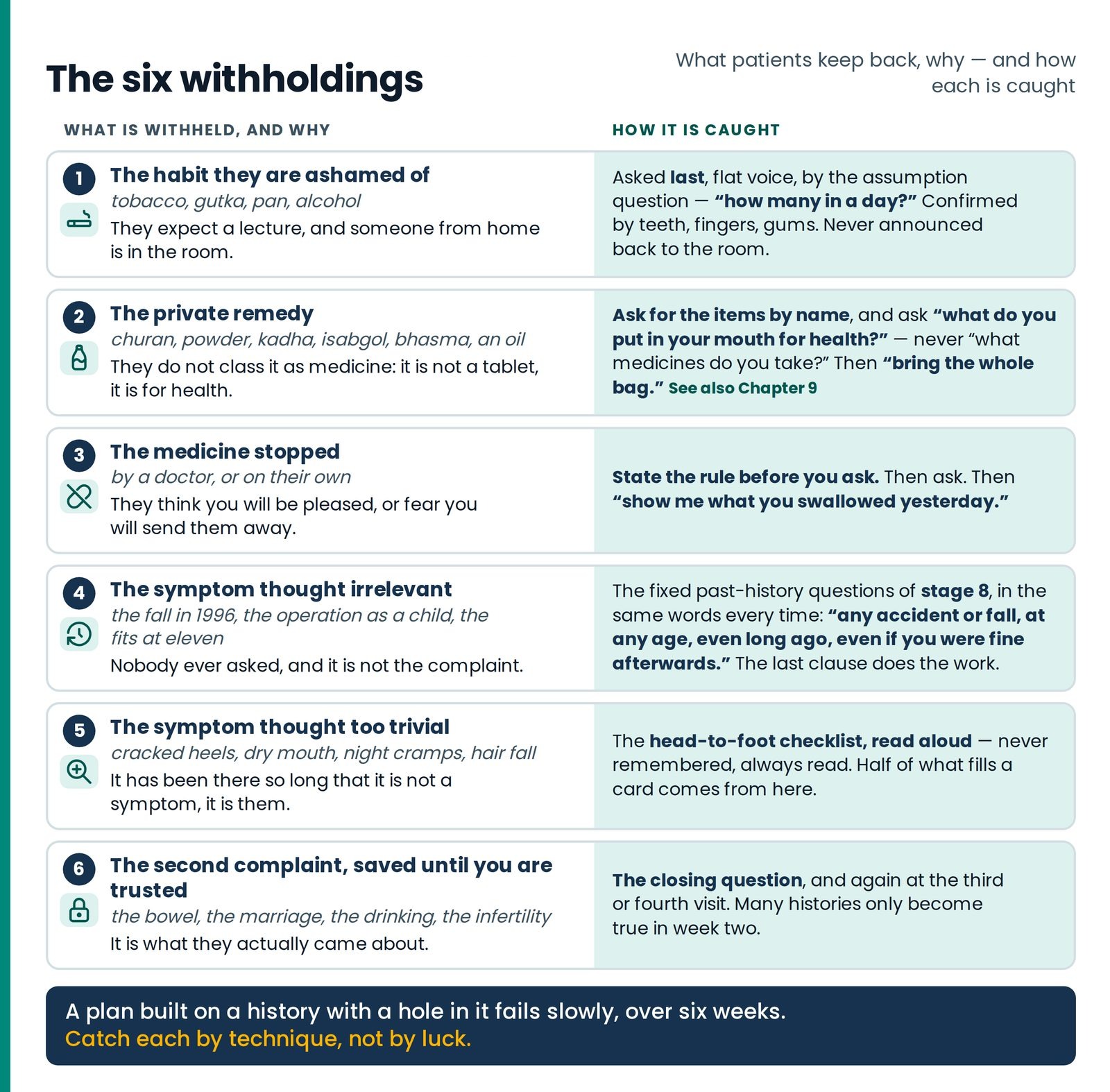
Six withholdings, the audience in the room, and looking before asking
A plan built on a history with a hole in it fails slowly, over six weeks, while you change the plan you should not have changed and the patient quietly loses faith. (Figure 11.4)
And look before you ask. Much of what a patient will not say is written on them — the brown staining and receding gum of a long pan or gutka habit, the yellowed fingers, the callus on the outer foot of a man who has squatted at work for thirty years, the way a person lowers himself into a chair, which tells you about the hip he did not mention. A question about something you have seen is easier to answer than one out of the air.
The six withholdings. What patients keep back — the shameful habit, the private remedy, the medicine stopped, the symptom thought irrelevant, the symptom thought too trivial, and the second complaint — with why each is withheld and how each is caught.
The questions that are never asked cold
What waits for trust, and the warning signs asked of everybody
Cold means asked before trust exists, without a reason given, and out of order. These are not forbidden; they are simply not first. Two more belong on the list. "What did that doctor say?", asked with an edge, invites the patient to defend or insult a previous practitioner — ask instead "what has been tried, and what helped even a little?" And "have you been told this cannot be cured?" puts the word incurable into the room in your voice; let them bring that one, as they almost always do, at the door.
Table 3 — Never cold, and what to do instead
Never cold
What it does early
Instead
"Do you drink?" · "Do you take tobacco?"
Announces in the first minute that this is a place of judgement
Stage 10, assumption question, flat voice, alone
"Do you eat non-veg?"
The patient answers the verdict inside the question
Ask what was eaten yesterday, meal by meal, before you say a word about parhez
"Are you following the parhez?"
Once taught, it can only be answered yes
Ask about yesterday's food and drink in detail, and work it out yourself
"Have you stopped your medicines?"
Sounds like a trap, and often is one
State the rule first, then ask, then "show me"
"Why did you not come earlier?" · "Can you afford to come daily?"
Shames a person for poverty or distance; answered with a lie that breaks the plan in week two
"How far is your journey, and which days can you come, honestly?"
"How long have you been trying for a child?" — in a hall
Ends the consultation, whatever else is said
Alone, at stage 11, after the ordinary questions about her cycle
Any question aimed at a body's weight
Ends candour immediately
"Has anything become loose or tight this year?" — which also catches weight loss nobody has noticed ▲ Take care
Ready to begin?
Send COURSE for course details, or your name, age and health issue for a consultation.