Lower and upper shoulder blade pain: two treatments and how to tell them apart
Neurotherapy (LMNT) has two treatments for pain in the shoulder blade, named for the area that hurts. Both begin beside the spine and finish at the hand, and they differ in what the arm is doing and in whether palms or feet are used.
Overview
The shoulder blade is a flat triangle of bone that does not sit in a socket. It floats on the back of the ribs, held there by muscle alone, and those muscles run on into the arm. So pain in the shoulder blade is rarely pain in the bone itself; it is pain in a sheet of tissue that starts at the spine and ends at the fingers. That is why both treatments begin beside the spine and finish at the hand.
Lower Shoulder Blade Pain is for pain in the lower portion of the blade. The patient lies face down, elbows bent, palms facing up. It is given with the therapist's palms, which draw the muscles from beside the spine along the arm and out to the fingertips. Both sides are treated.
Upper Shoulder Blade Pain is for pain in the upper portion. The patient lies face down with the arms raised, elbows bent and palms facing down. The therapist's feet, with the weight carried on chairs, slide along both arms to the elbow and then take small close steps on to the palm.
Turning the palm and raising the arm changes which portion of the blade lies open: palm up with the arms down presents the lower portion; arms up with palms down brings the upper corner forward. In cervical (neck) problems, giving BAFA after these two is described as very helpful. The exact methods are taught hands-on in the course.
Key points
- Each treatment is named for the portion of the shoulder blade that hurts.
- Lower is given with the palms, arms down and palms up.
- Upper is given with the feet, arms raised and palms down.
- Both run from beside the spine out to the hand.
- In neck problems, BAFA follows the two.
Go deeper
Lower Shoulder Blade Pain
The full point page for Lower Shoulder Blade Pain
Upper Shoulder Blade Pain
The full point page for Upper Shoulder Blade Pain
BAFA
BAFA, which follows these two in neck problems
Shoulder blade pain
Shoulder blade pain and how it is approached
Cervical spondylosis
Cervical spondylosis
Heart attack (myocardial infarction)
When back pain is really the heart
Neck
The neck
Uncommon Problems: Neurotherapy (LMNT) Points Found One Patient at a Time
The full guide to treatments for uncommon problems
Read the full guide
This topic is part of: Uncommon Problems: Neurotherapy (LMNT) Points Found One Patient at a Time
Safety: when it is held back
- Pain between or around the shoulder blades with chest pressure or tightness, breathlessness, sweating, nausea, or pain into the jaw or down an arm may be the heart. Stop, sit the patient up and call emergency services (108/112). Heart attack (myocardial infarction)
- Pain that is constant, worse at night, or in someone who has had cancer is checked by a doctor before it is treated. Cancer care: Neurotherapy (LMNT) support
- New or unusual neck pain with headache, or any change in vision or balance: nothing is pressed on the neck until a doctor has looked. Neck
- Neurotherapy (LMNT) works alongside your medical care. Do not stop or change any medicine on your own.
Watch
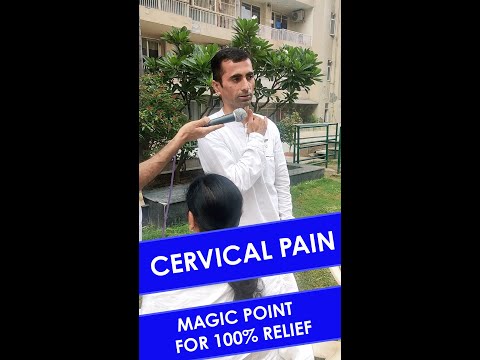
Shows a seated routine for neck pain: zig-zag fingertip massage from the base of the skull to the shoulder blades and down the arm, cross-rubbing, rounds of breathing out through the mouth, and a gentle grip massage at the back of the neck. It is shared for relief in cervical pain and tingling in the hands.
This page explains what a Neurotherapy (LMNT) treatment is for; it is not a self-treatment guide and does not diagnose. Neurotherapy (LMNT) works alongside your medical care — keep taking the medicines your doctor prescribed.