Depression (extreme sadness)
Depression is more than a bad day. It is a low, heavy mood that stays for weeks and takes the joy out of things you used to like. It is common, it is not a weakness, and it can be treated.
- About 5 in 100 adults worldwide live with depression
- Women have it about 1.5 times as often as men
- More than 10 in 100 women have it during pregnancy or after giving birth
Source: World Health Organization (depression fact sheet); MedlinePlus
What is Depression (extreme sadness)?
Everyone feels sad sometimes. Depression is different: the low mood, or the loss of interest in almost everything, lasts most of the day, nearly every day, for at least two weeks. It changes how a person thinks, feels, sleeps and eats.
It comes from a mix of things — family history, the chemistry of the brain, stress and painful life events. It is nobody's fault. Talking treatments and medicines both help, and many people feel well again with the right support.
What are the symptoms?
- Feeling sad, empty or hopeless most of the day
- Losing interest in things you used to enjoy
- Sleeping too little or too much
- Tiredness, and eating much less or much more
- Feeling guilty, worthless or irritable; trouble concentrating
- Thoughts of death or of harming yourself — please get help today
What causes it, and who is more likely to get it?
Life events and stress
- The death of someone close
- Trauma, conflict in the family, or loneliness
- Losing a job, or money worries
Family and body
Habits
- Little physical activity
- Alcohol use
How is it found?
There is no single blood test for depression. A doctor or mental-health professional talks with you about how you have been feeling, for how long, and how it affects your days.
A caring conversation and a questionnaire
Questions about mood, interest, sleep, appetite, energy and safety, asked most of the day, nearly every day, over two weeks or more.
Physical examination and blood tests
To look for other conditions or medicines that can cause similar feelings.
A neurotherapist does not diagnose depression. They listen, ask gently whether you feel safe, respect the care you already have from your doctor, and then examine the body — Liv°, Mu°, the bowel, the sleep and every tablet you take.
How Neurotherapy sees Depression (extreme sadness)
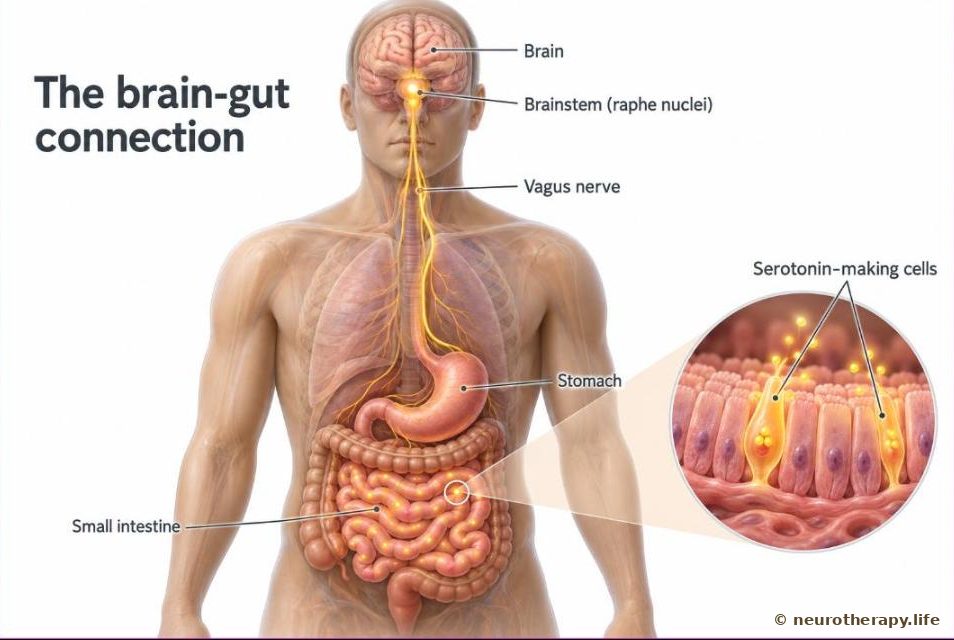
Neurotherapy sees the mind and the belly as closely tied. Mental tension, fear and anger are among the causes it names for organs slowing down. And it notes that in depression, serotonin — the chemical tied to calm and sleep — may be made in short supply when the raw materials from digestion are not reaching the body.
How worry reaches the belly — and back
- Worry and fearswitch on the body's 'fight-or-flight' mode
- Digestionis put last — the belly gets less blood
- Raw materialsfrom food are not fully digested and taken in
- Serotoninmay be made in short supply
- Mood and sleepfeel the shortage — sadness, poor sleep
So the therapist asks about the stool before anything else, because undigested food is one of the things LMNT teaching links with depression. The rest-and-digest side of the nerves is woken by calm, warmth, unhurried breathing and feeling safe — which is why a quiet, kind session matters as much as the points.
Whether or not the patient gets immediate benefit from our treatment, let no harm reach him through our carelessness — attend to this.
Neurotherapy treatment for Depression (extreme sadness), step by step
Listen first, and check safety
The therapist listens without hurry and asks gently about thoughts of self-harm. If there are any, help from a doctor or a helpline comes first, today. Then Liv° and Mu° are checked, and the sleep, the bowel and every tablet are asked about.
Look at digestion
LMNT teaching lists depression among the conditions in which undigested food is found. If food is coming through undigested, digestion is set right first.
(8) Medulla — for serotonin
Seated, eight applications on both sides of the neck just below the ears. It is held to stimulate serotonin, which LMNT teaching links with sleep and with extreme sadness.
(6) Adr × 3 treatments
The adrenal point, given for three treatments. LMNT teaching names it for fear and for depression. It is given only when none of its bars apply.
A calmer day
Meals eaten slowly, without work at the table; time outdoors and gentle movement; a regular bedtime. Small, kind steps — not orders.
Points and formulas used
(6) Adr × 3 treatments
The adrenal treatment, named in LMNT for fear and extreme sadness; it lowers immunity, so it has strict bars.
Open →Never do this
- Thoughts of self-harm or suicide need urgent help from a doctor or a crisis helpline today (India: Tele-MANAS 14416, free). In immediate danger, call 112. You do not have to face this alone.
- (6) Adr is not given in septicaemia, AIDS, HIV, cancer or high blood pressure. (6) Adr
- (8) Medulla is not given in inflammation, in cancer, or in high blood pressure. (8) Medulla
- Never stop, reduce or delay an antidepressant or talking therapy on your own. Any change is decided with your doctor.
- Cancer: if the person has cancer, (10) Pan, Thymus, Pit, Lu + Sh, Rt. Ov / Lt. Ov and (30) Medulla are never given — the therapist changes the plan.
- Keep taking the medicines your doctor prescribed. Neurotherapy works alongside your medical care, never instead of it.
Watch
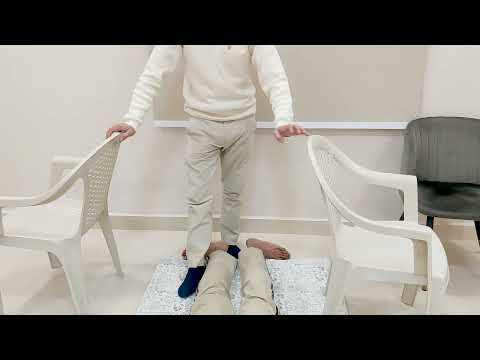
Shows the Serotonin treatment for sleep: (8) Medulla below the ears, 1 Gas 'I' at six points on the shin, (6) Adr on the upper back, and gentle massage behind the knees and at the back of the head. It is given to support deep, natural sleep.
Note: (8) Medulla is not given in high BP, inflammation or cancer; (6) Adr is not given in high BP, diabetes, cancer or HIV.
From Ayurveda and the kitchen
Test yourself
What research says
- Strong evidence
About 90% of the body's serotonin is made in the gut lining; the rest in the brainstem. It is built from tryptophan, an amino acid from food, and it helps regulate mood, memory, sleep and digestion. Low serotonin activity is linked with depression and anxiety.
Bamalan OA, Moore MJ, Al Khalili Y. Physiology, Serotonin. StatPearls. 2023.
- Strong evidence
Depression comes from brain chemistry, genes and life stress together. Close relatives of a person with depression have about three times the risk. It is treatable with talking therapy, medicines, or both, and every person with depression should be asked gently about suicide risk.
No clinical trial of Neurotherapy in depression has been published yet. Improvements reported by neurotherapists are clinical observations.
For you
New mothers
Feeling low for more than two weeks after the birth is not 'just tiredness'. Tell your doctor — help is available and it works.
Family and friends
Listen more than you advise. Do not say 'just be positive'. Stay close, help with small daily tasks, and help the person reach a doctor or a helpline.
People taking medicine for depression
Keep taking it as prescribed, even on good days. If you have side effects or feel better, talk to your doctor before any change.
This page explains; it does not diagnose. Neurotherapy works alongside your medical care — keep taking the medicines your doctor prescribed, and see a doctor for any new or severe symptom.